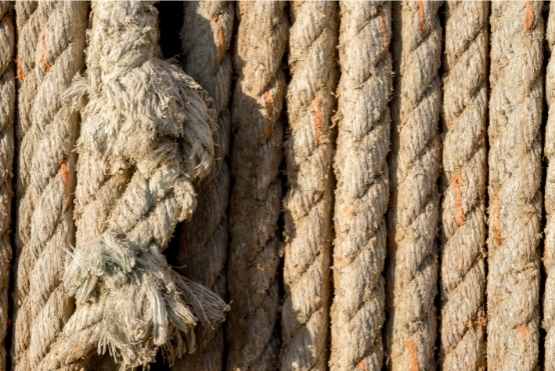
A spliced rope retains up to 90% of its original strength, making it significantly stronger and more reliable than knotted rope, which can lose up to 60% of its strength.
You may have come across the term “splicing”, particularly if you work in the marine sector. Splicing is a term used to describe the joining together of two ends of a rope without using a knot. This is achieved by interweaving their strands to form a loop or stopper, or to join two ropes together.
At SRS Group, we have the splicing tools and capacity to produce different types of splices, particularly for the marine industry.
From traditional three-strand rope right through to modern-day manmade fibres, we have the skill, expertise, and know-how to make it happen.
Why splice a rope instead of a knot?
Knots have long been associated with the marine industry, and whilst they still have their value, splicing has become the de facto way to join ropes or two parts of the same rope.
That’s because, unlike knots, splicing a rope does cause a significant loss in the overall strength of the rope. Even a correctly tied knot can result in a significant loss of strength in a rope, as well as being more bulky and unsightly than a spliced rope.
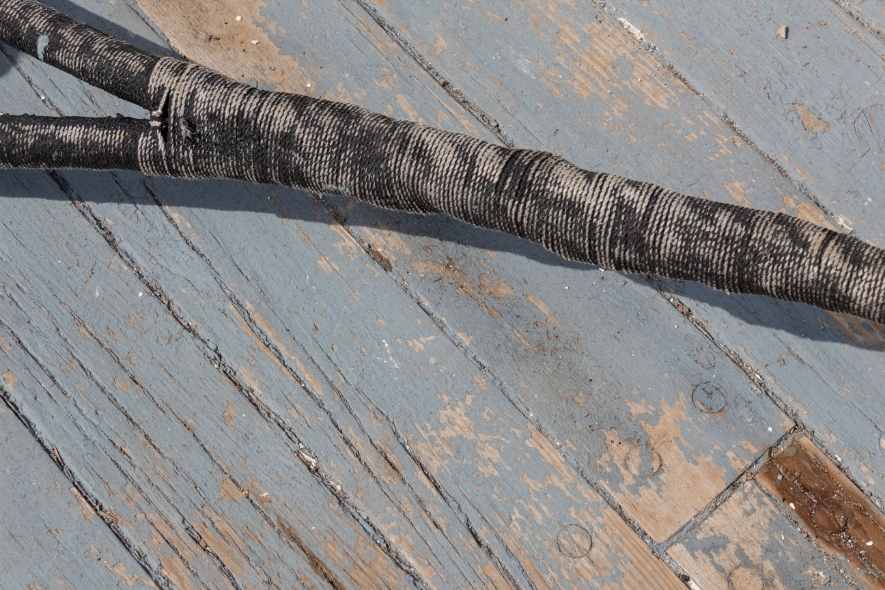
Splicing, on the other hand, retains most of the original strength of the rope and when done correctly, should not reduce the strength of the rope by more than 10%.
A knot will reduce the strength of a rope due to the tight bends and compression that are found in any type of knot. The amount a rope will be weakened by a knot will depend on both the type of material the rope is made out of and the type of knot used, but knots can reduce the strength of a rope by up to 60%.
Quick Comparison: Splice vs. Knot Strength
|
Factor |
Rope Splice |
Rope Knot |
|
Strength Retained |
~90% |
Can lose up to 60% |
|
Appearance |
Clean, compact |
Bulkier, uneven |
|
Durability |
Higher, minimal stress |
Reduced due to tight bends |
|
Best For |
Permanent joins, load-bearing |
Temporary joins, quick fixes |
What can spliced rope be used for?
There are three basic types of splices that are typically made on a three-strand twisted rope: an eye splice, a back splice, and a short splice. The basic process in all three splices is to unlay the strands at the end of the rope, then weave them over and under back into the rope to form the splice.
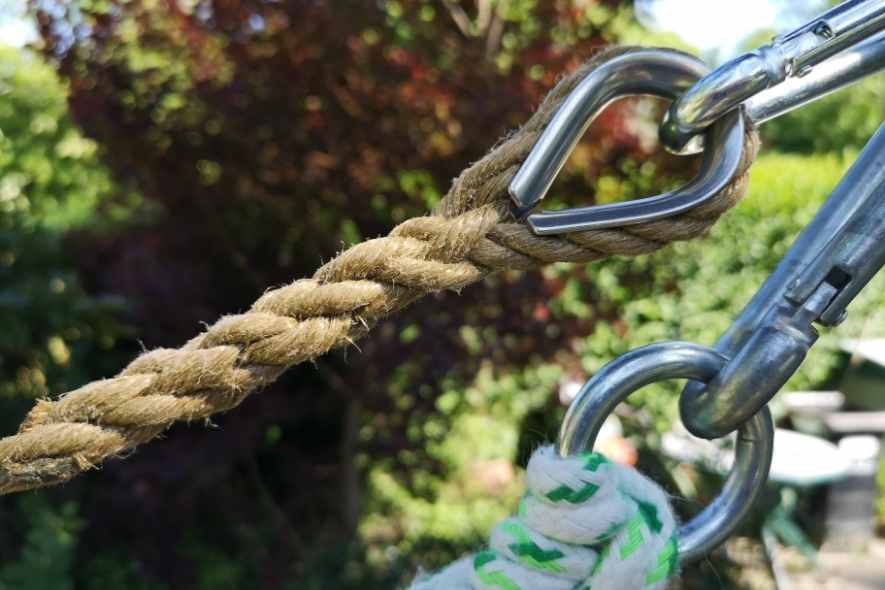
Once spliced, these ropes can have many uses. At SRS, we offer tensile synthetic cables, cordage supply and traditional rope balustrades and can supply lines in a huge variety of materials including:
- spectra (Dyneema)
- Vectran
- kevlar
- polyamides
- polyester
- dacron
- braid on braid
- double braid
- king braid
- covered/uncovered Dyneema
- UV treated Dyneema
- traditional hemp style lines
Whatever your needs or requirements, we make sure we produce quality rope splice that retains and prevents fraying, maintaining their rope strength as they should.
Benefits of Choosing a Professionally Spliced Rope
Selecting a professionally spliced rope ensures you get a product that performs reliably under demanding conditions. Expert splicing maintains the rope’s natural integrity, allowing it to handle heavy loads and repetitive stress without slipping, loosening, or breaking prematurely. Unlike DIY or poorly executed splices, professional work ensures consistency, safety, and long-term durability; all crucial for industries where precision and reliability matter.
Here are the key advantages:
- Maximum Strength Retention – A proper splice helps the rope maintain up to 90% of its original strength, making it ideal for load-bearing and safety-critical applications.
- Improved Safety and Security – Professionally spliced ropes reduce the risk of sudden failure because the join is carefully woven to distribute pressure evenly.
- Cleaner and More Aesthetic Finish – Splices look neat and uniform, which is especially beneficial for architectural installations, balustrades, and visible rigging elements.
- Extended Rope Lifespan – Because splicing avoids the sharp bends and compression caused by knots, the rope remains in better condition for longer.
- Consistent Performance – Every splice is produced to a high standard, ensuring predictable behaviour even when used repeatedly under stress.
- Customisation for Specific Applications – Professionals tailor the splice to the rope type, load requirements, and intended use — whether for marine work, architectural rigging, or decorative installations.
- Ideal for Marine & Structural Environments – Spliced ropes perform better in environments exposed to wind, movement, and vibration, making them essential for marine, outdoor, and construction settings.
- Prevents Fraying & Wear – Proper termination techniques like back splicing help protect rope ends, reducing fraying and keeping the rope functional longer.
Summary
Returning to the question posed at the start of this post, a spliced rope is typically much stronger than a rope that is joined with a knot, making it the preferred option for the joining of ropes. The overall strength of a rope that has been spliced should be retained, with a reduction in strength of less than 10% compared to up to 60% when a knot is used.
If you need quality rope splicing, SRS Group offers professional rope splicing, tensile synthetic cables, cordage supply, and architectural rigging solutions. Talk to the team at SRS today, and we can provide custom spliced ropes suited for marine, structural, and balustrade applications.
Frequently Asked Questions
How much stronger is a spliced rope compared to a knotted rope?
A spliced rope typically retains about 90% of its original strength, whereas a knotted rope may lose up to 60% of its strength depending on the knot and rope material.
Does splicing work on all rope types?
Most natural and synthetic ropes can be spliced, including Dyneema, polyester, Kevlar, and traditional hemp-style ropes.
Does SRS Group offer custom rope splicing services?
Yes, SRS Group provides custom splicing, rope supply, synthetic cable solutions, and rigging services tailored to various industries.
Post first published 6 December 2021 and last updated 15 October 2025