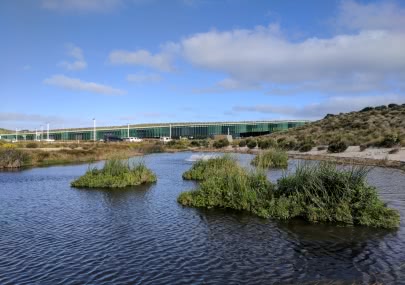
Floating gardens are built using foam-based hydroponic media covered in felt with perimeter air piping, providing buoyancy and ideal growth conditions for plants while supporting waterway cleaning and aesthetics.
Floating gardens are fast becoming a popular solution for adding to a city’s green space. First developed back in the 10th and 11th centuries by the Aztecs, floating gardens have come a long way since those early days.
A brief history of floating gardens
The floating gardens we see today are very different, yet they take all the same principles from those early floating gardens developed by the Aztecs.
After they were driven off their land, Aztecs settled at Lake Tenochtitlan where they developed the first floating gardens based on hydroponics, a system still used today.
Fast forward to today, and floating gardens around the world are still being used to grow crops as well as native plants and grasses, helping to bring more green space to urban areas including cities like Paris, Mexico City and Rotterdam.
What materials are used to create floating gardens?
The original floating gardens developed by the Aztecs were rafts built from reeds and roots. Today, the same principles exist, however, those roots are supported by an artificial ‘raft’ to support growth and buoyancy.
At SRS, we have worked on a number of floating garden projects, mainly for companies and organisations with a large expanse of water looking for a sustainable solution to both help to protect and clean the waterway, but also to improve the overall aesthetics of the waterway.
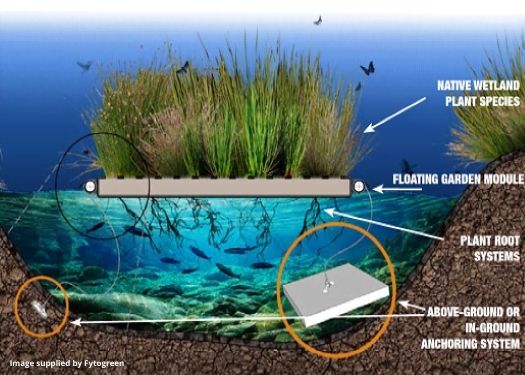
Our floating gardens is a hydroponic growing media made from a foam matrix that has a honeycomb lattice of air holes throughout its mass that allows air, water, and nutrients access to the plant roots as they grow through it.
Covering the foam is a felt and surrounding the modules of foam is a perimeter piping full of air to provide more buoyancy. This provides a floating island ideally suited for plants to grow upon.
The island is modular and can be any shape and size. Watered and fed by the waterway it floats in, all we are required to do is match the plant species to the type of water the garden will be floating in. Salinity, pH, temperature and expected exposures to sun and wind are all considered in making the selection of what plants to use.
How do floating gardens help to clean and protect waterways?
1. Enhance aesthetics and provide sustainable cleaning
Floating gardens add visual appeal to a waterway while offering a sustainable method to keep it clean and thriving.
2. Proven water quality improvement
Research by Illinois State University’s Department of Geology found that even small floating gardens can make a measurable difference. Weekly samples taken 30cm below the water surface, upstream and downstream of a 3m x 50m floating garden, showed improved water quality, especially for nitrates.
3. Suitable for large waterway management
Results demonstrate benefits for organisations managing expansive waterways, such as golf courses, zoos, parklands, and botanic gardens. Floating gardens can be an integral part of a water maintenance program.
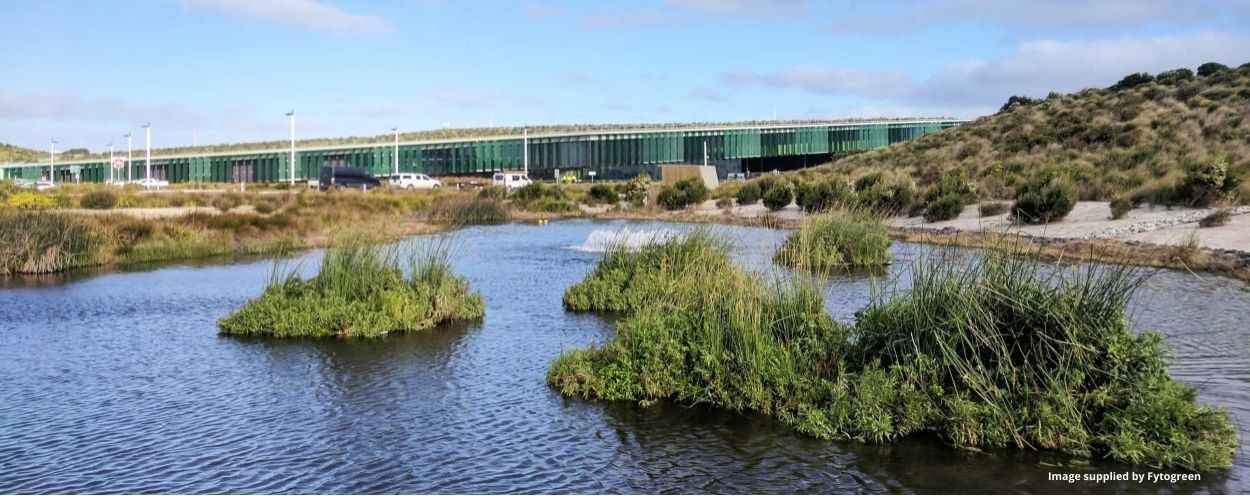
4. Support native wildlife
Floating gardens encourage the introduction of native birds, insects, and aquatic animals to the area, creating a healthier ecosystem.
5. Resistant design
The felt-covered hydroponic media is specifically designed to resist nesting efforts from many water birds, ensuring the garden remains effective and functional.
Applications of Floating Gardens
Floating gardens are versatile and can be applied to a wide range of urban, commercial, and recreational environments. Their modular design allows them to be adapted to waterways of any size or shape, while their hydroponic system ensures optimal plant growth and environmental benefits.
Key Applications:
- Urban Waterways – Cities like Paris, Mexico City, and Rotterdam use floating gardens to bring green spaces into dense urban environments, improving aesthetics and air quality.
- Golf Courses and Parks – Floating gardens act as sustainable waterway maintenance solutions, enhancing the visual appeal of ponds, lakes, and artificial water features.
- Zoos and Botanic Gardens – They provide natural habitats for birds, insects, and aquatic wildlife, promoting biodiversity and enriching the visitor experience.
- Corporate and Institutional Projects – Organisations seeking eco-friendly solutions can implement floating gardens to showcase sustainability initiatives while maintaining functional waterways.
- Educational and Research Sites – Floating gardens are excellent tools for environmental studies, water quality research, and teaching hydroponic systems.
- Private Estates and Residential Developments – Homeowners or developers with large ponds or lakes can use floating gardens to enhance landscaping while contributing to a healthier ecosystem.
Floating gardens are not only visually striking but also serve as practical, environmentally conscious solutions for maintaining healthy waterways, improving water quality, and supporting local ecosystems.
Summary
Floating gardens are an innovative and sustainable way to add green space, protect waterways, and improve urban aesthetics. Using a hydroponic foam matrix covered in felt with air-filled perimeter piping, these modular floating gardens provide optimal plant growth while cleaning water and supporting wildlife.
At SRS Group, we specialise in floating gardens and a range of green wall solutions, providing expert design, material selection, and installation tailored to your waterway or landscape. Whether you manage a city park, golf course, zoo, or private estate, SRS ensures your floating gardens are effective, environmentally friendly, and visually appealing.
Frequently Asked Questions
What materials are used to make modern floating gardens?
Floating gardens use a foam hydroponic matrix, felt covering, and air-filled perimeter piping to support buoyancy, plant growth, and waterway cleaning.
Can floating gardens be customised in shape and size?
Yes, floating gardens are modular and can be shaped to fit any waterway, from small ponds to large urban rivers.
Does SRS Group provide floating garden solutions?
Yes, SRS Group designs, installs, and maintains floating gardens, offering custom solutions for commercial, urban, and recreational waterways.
Post first published 15 March 2021 and last updated 22 September 2025