X-Tend® tensile mesh is a high-performance stainless steel cable mesh system that lets architects balance transparency, safety and structural reliability in a single solution. For New Zealand projects, it is especially valuable where balustrade mesh systems, facade engineering and public safety need to work together without making a building feel heavy or closed in.
What is X-Tend® mesh?
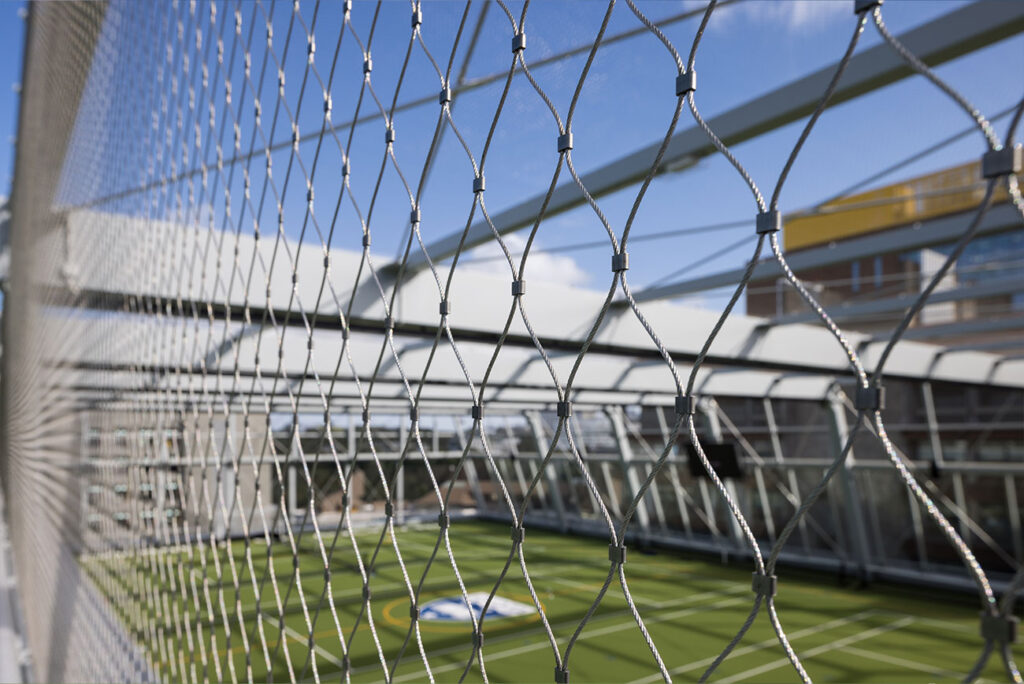
X-Tend® tensile mesh is a woven stainless steel cable mesh designed for demanding architectural and safety applications. It uses a grid of interconnected wire rope elements, tensioned within a perimeter frame or support structure, to create a surface that is strong, adaptable and visually light. In practice, that means it can serve as both an architectural feature and a safety element, which is why it is increasingly used in facades, balustrades, infill panels and protective barriers.
The key advantage is that the mesh does not rely on mass to perform. Instead, it works through tension, geometry and connection detail. That gives designers a material that can span visually open areas while still contributing meaningful load capacity and fall protection. For projects where sightlines, daylight and spatial openness matter, X-tend® tensile mesh offers a distinctly modern answer to a very practical problem.
Form and function
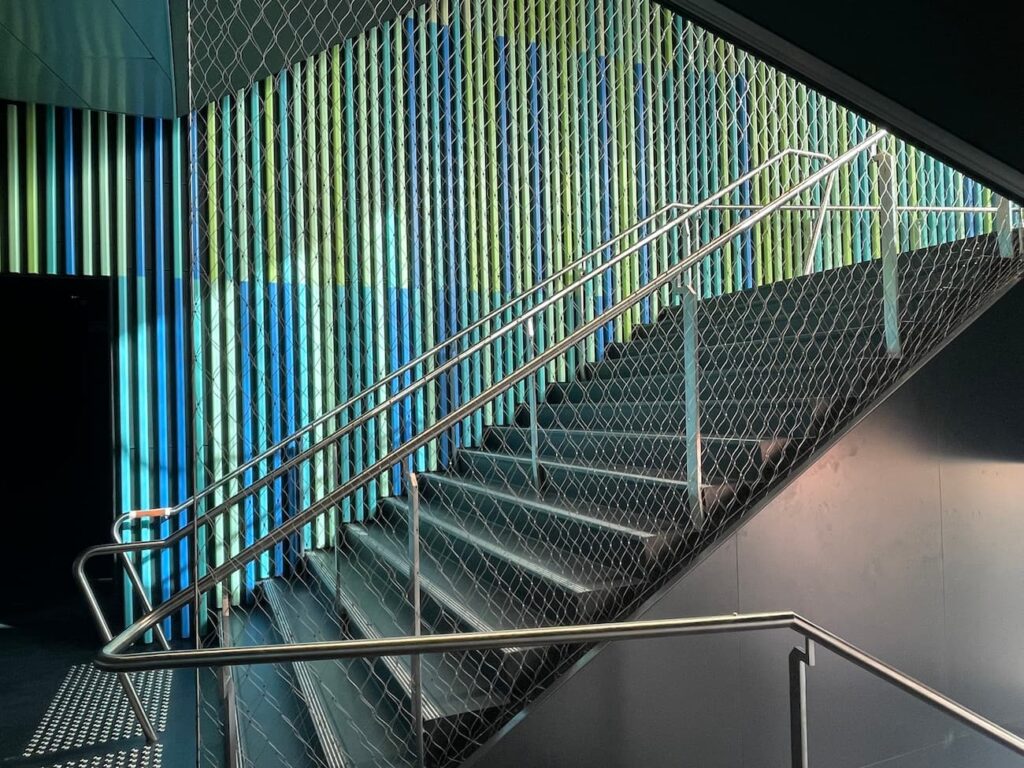
One of the main reasons architects choose stainless steel cable mesh is its ability to combine form and function without compromise. As a facade or screening element, it can soften a building’s appearance, reduce visual bulk and provide a degree of shading or enclosure while preserving transparency. As a safety element, it can act as an architectural safety mesh solution that helps protect users on stairs, walkways, balconies, terraces and elevated public spaces.
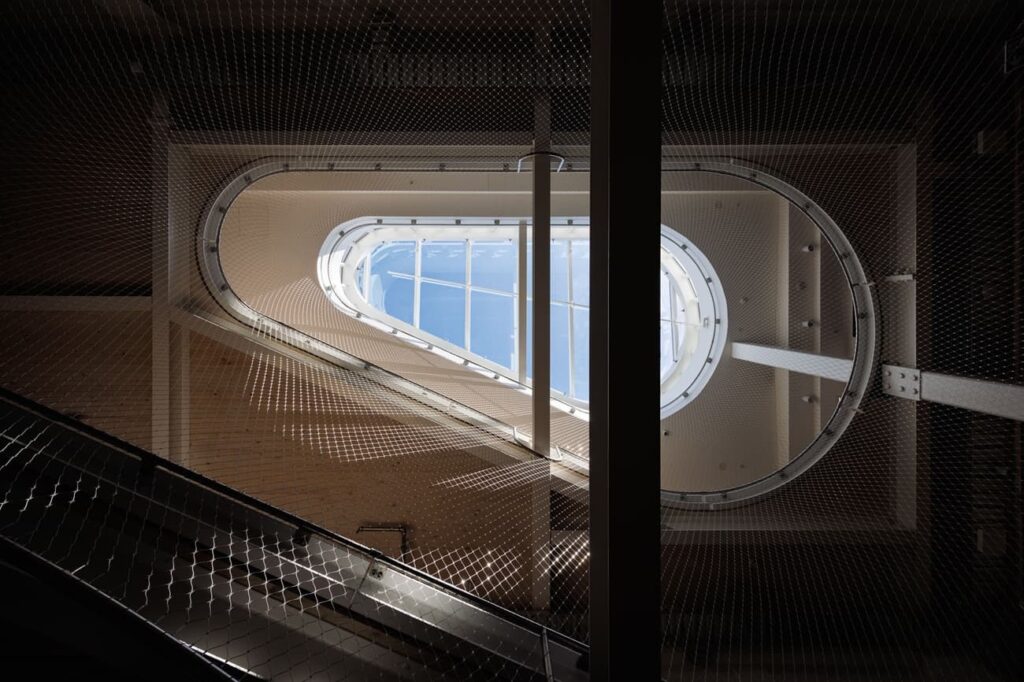
That dual role matters in commercial, civil and high-end residential work. In commercial projects, it can support a premium visual identity without sacrificing code-driven safety. In civil environments, it can help manage movement, protect users and integrate discreetly into public infrastructure. In high-end residential projects, it gives homeowners and developers a balustrade mesh system that feels refined rather than utilitarian.
For facade engineering, the value is clear. X-tend® tensile mesh allows the design team to treat safety, screening and building expression as part of the same system, rather than layering separate products that compete with each other visually and technically.
Performance benefits
The performance profile of X-tend® tensile mesh is what makes it so useful in real projects. First, it offers strong load capacity when correctly specified and installed, which is why it is trusted in fall-arrest and barrier applications. The structure works through the interplay of stainless steel, wire rope and tensioned fixings, creating a resilient system that can respond to load without looking heavy.
Second, transparency is a genuine design advantage. Unlike opaque barriers or solid cladding, cable mesh preserves views and daylight. That is particularly valuable in Auckland, where coastal outlooks, urban views and open public spaces are often part of the design brief. In many projects, the difference between a visually intrusive barrier and a refined mesh solution is the difference between an acceptable outcome and an exceptional one.
Third, corrosion resistance is critical in New Zealand conditions. Stainless steel performs well in exposed environments, including coastal and marine settings, which makes it suitable for Auckland’s climate and many sites across the country. When paired with correct detailing, proper fixings and a thoughtful maintenance plan, X-tend® tensile mesh can deliver long service life with low visual degradation.
There is also a practical maintenance benefit. Because the system is composed of relatively simple, durable elements, it can be easier to inspect and maintain than more complex enclosure systems. That makes it appealing for asset owners who need durability without creating a high-maintenance feature.
New Zealand use cases
In commercial settings, X-tend® tensile mesh is often used for atriums, balustrades, public circulation zones, facades and screening elements. It is especially effective where designers want a building to feel open, light and premium while still meeting safety and access requirements. In shopping centres, office buildings and hospitality projects, it can also be used to create subtle spatial separation without making the architecture feel boxed in.
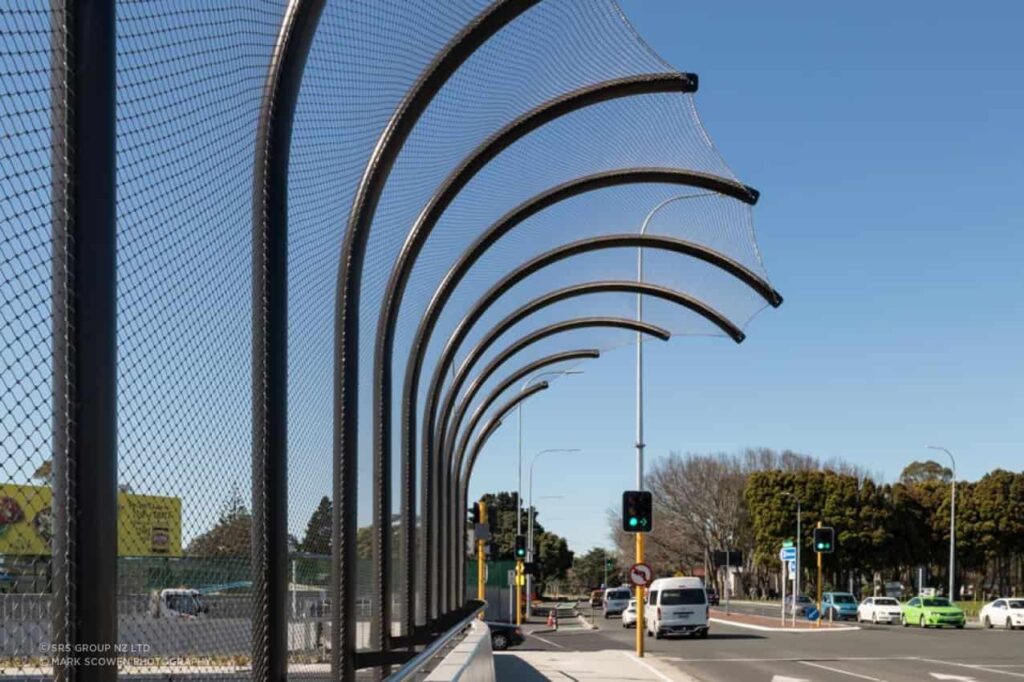
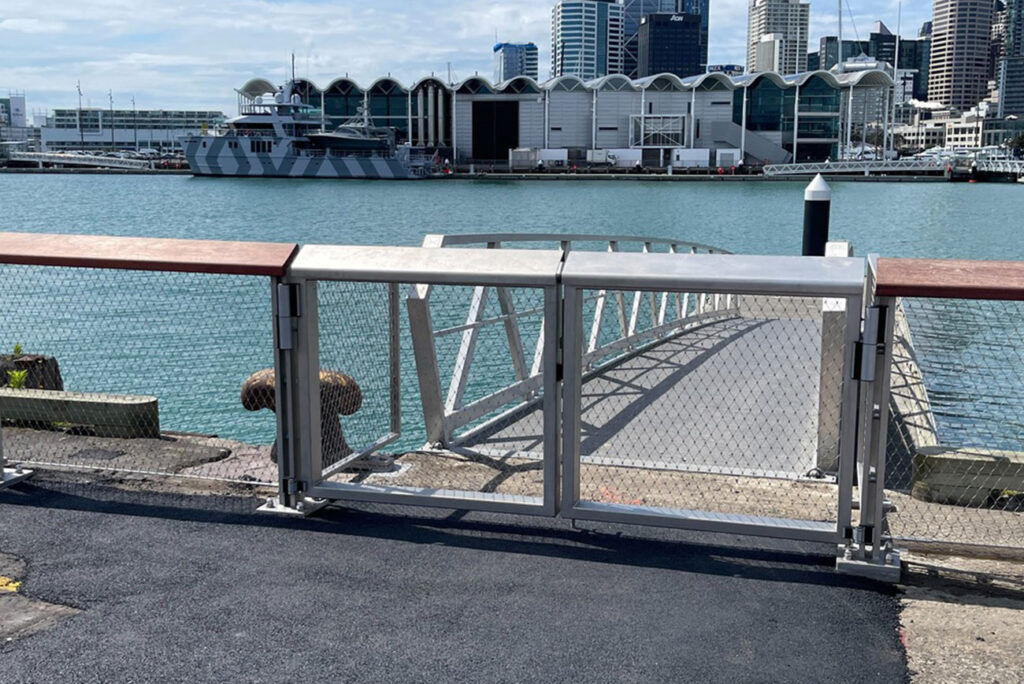
In civil projects, the mesh is useful for walkways, viewing platforms, wharf edges, bridges and public realm applications. These sites often require a material that can withstand exposure, support public safety and integrate with other structural components without dominating the design. A well-executed architectural safety mesh installation can make a public environment safer while preserving the sense of openness that people value in civic spaces.
For high-end residential projects, X-tend® tensile mesh can be used in stair balustrades, terrace barriers, garden enclosures and feature screening. In this context, the material’s visual lightness is especially important. It gives architects and homeowners a contemporary safety solution that supports premium aesthetics instead of competing with them. It can also be tailored to suit different levels of privacy, openness and design intent.
Across all three sectors, the balustrade mesh system is most effective when it is specified early, coordinated carefully and integrated into the wider structural and architectural package. That is where specialist input becomes essential.
Design and compliance
Designing with X-tend® tensile mesh is not just a matter of selecting a product and adding it to a drawing. It requires coordination between architects, engineers, fabricators and installers from the beginning. The key issues include load path, support spacing, fixing geometry, edge conditions, deflection, corrosion environment and how the mesh interacts with adjacent materials such as glass, timber, aluminium or powder-coated steel.
Compliance is equally important. In New Zealand, architects and engineers need to ensure any balustrade mesh system or architectural safety mesh NZ solution is designed and installed to meet the relevant building code, safety expectations and project-specific performance criteria. That includes considering likely use conditions, occupant loads, maintenance access and the implications of the site environment, particularly in exposed coastal or high-traffic locations.
Facade engineering also comes into play when mesh is used as a screen or architectural layer rather than only as a barrier. The mesh must then work with the broader building envelope, including movement joints, thermal behaviour, drainage and long-term durability. If those factors are not addressed early, the project can face avoidable redesign, delays or compromise in the finished detail.
For engineers, the most important point is that the system should be treated as a structural component with architectural consequences, not as an afterthought. For architects, the message is that good mesh design supports the original design intent by making safety visually quiet and technically robust.
How SRS collaborates
SRS Group is well placed to support X-tend® tensile mesh projects because the team understands both the design intent and the technical realities behind delivery. From the concept stage, SRS can work with architects, engineers and contractors to assess whether stainless steel cable mesh is the right solution for the space, the load case and the visual brief.
That process typically starts with early design advice. The team helps identify the appropriate mesh configuration, support arrangement and fixing strategy, then works through constructability, compliance and installation sequencing. This is valuable because the best mesh details are often the ones that are resolved before the project reaches the shop drawing stage.
From there, SRS can move into detailed coordination, fabrication and installation. That end-to-end capability matters because it reduces the risk of misalignment between design and delivery. The same team that understands the technical requirements of the system is also involved in making sure the result is buildable, safe and finished to a high standard.
Luke Tempest’s leadership is an important part of that proposition. His background in complex rigging and marine-grade systems gives SRS a practical edge when dealing with tensioned structures, exposed environments and high-expectation clients. For commercial, civil and high-end residential projects, that kind of experience can make the difference between a standard outcome and a carefully resolved architectural feature.
Why SRS stands out
Many suppliers can provide mesh. Fewer can provide the combination of design understanding, fabrication depth and installation discipline that X-tend® tensile mesh demands. SRS stands out because it treats the system as part of a broader architectural and structural solution rather than as a standalone product.
That means the team is comfortable working across multiple audiences at once. Architects want visual clarity and design integrity. Engineers want performance and compliance. Contractors want certainty, programme control and minimal rework. SRS is set up to address all three.
The company’s broader capability in fabrication, rigging and bespoke metalwork also supports better coordination with adjacent elements. That is especially useful when a mesh solution needs to integrate with a custom balustrade, structural frame or feature enclosure. The result is a more coherent final product and fewer compromises on site.
Exclusive distribution of X-Tend® mesh in New Zealand
SRS Group has built a strong partnership with Ronstan Tensile Architecture, a global leader in tensile architecture and rigging solutions. What began as a supplier relationship has evolved into a collaboration that combines Ronstan’s world-class components and proficiency in tensile structures with SRS’s installation expertise.
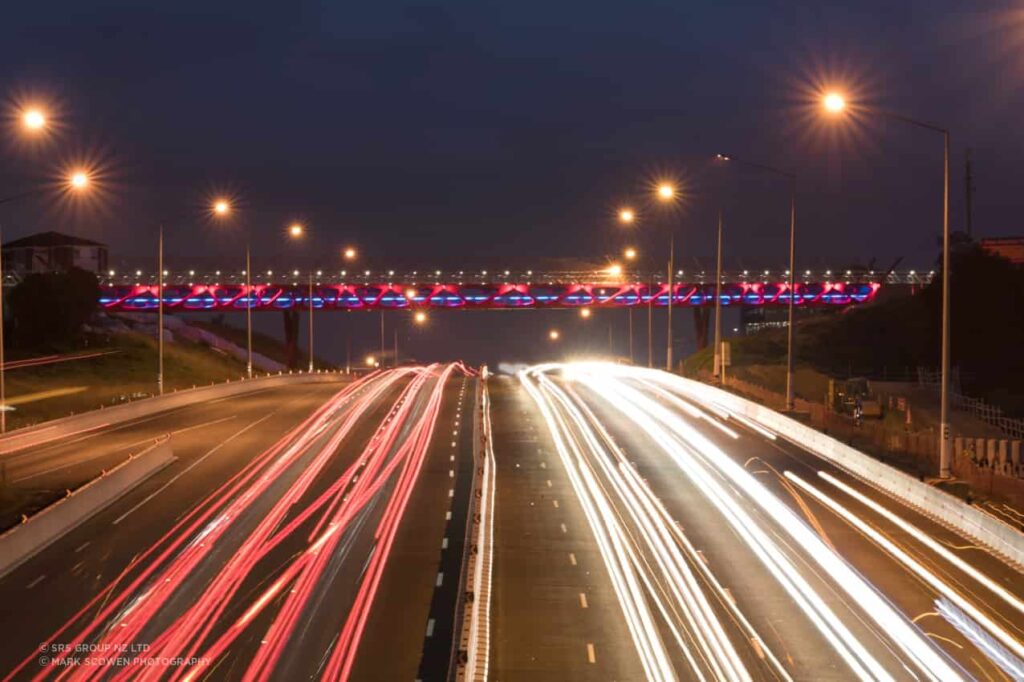
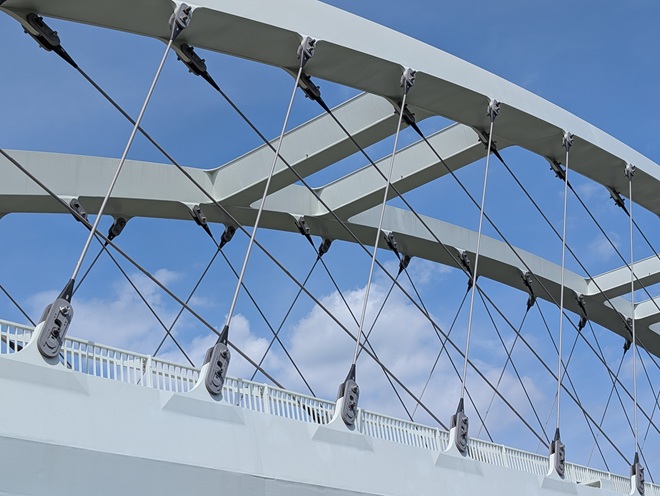
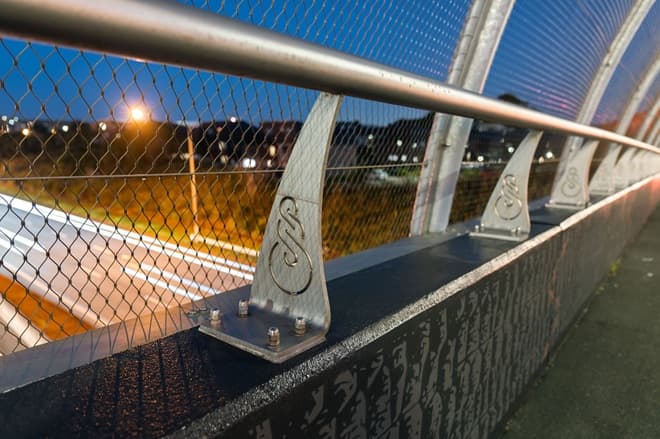
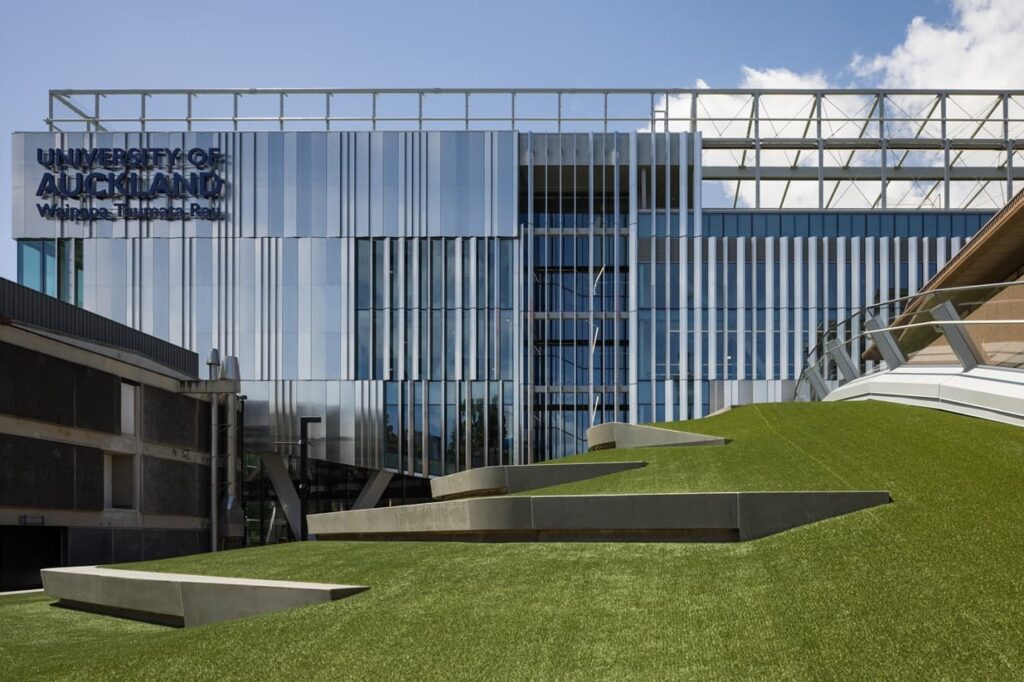
As the preferred installer for Ronstan in New Zealand and the exclusive distributor of Carl Stahl X-TEND® mesh for Ronstan in NZ, SRS has delivered landmark projects such as the Kirkbride Overpass, Spencer Road Bridge, and the University of Auckland HIWA building for Ronstan, where Carl Stahl X-TEND® stainless steel mesh and Ronstan rigging systems provide both safety and architectural elegance.
The future of mesh design
The future of X-tend® tensile mesh and similar systems will likely be shaped by smarter detailing, more integrated digital coordination and greater demand for lightweight, durable architectural safety solutions. As Auckland continues to grow and as more projects prioritise transparency, resilience and user experience, stainless steel cable mesh will remain a valuable tool for designers who want openness without risk.
For civil projects, that means better public spaces and safer movement zones. For commercial projects, it means refined building envelopes and more flexible interior and exterior barriers. For high-end residential projects, it means elegant protection that does not overwhelm the architecture.
SRS is focused on staying ahead of that curve by combining specialist knowledge with hands-on delivery. That makes the company a strong partner for teams looking to use mesh not just as a safety measure, but as an architectural asset.
Talk to the team
If you are planning a project that needs transparency, safety and architectural control in one solution, X-tend® tensile mesh is worth serious consideration. For architects, engineers, contractors and developers working across civil, commercial and high-end residential settings, SRS Group can help turn the concept into a compliant, buildable and visually refined outcome.
Book a design consult with SRS tensile specialists to explore how X-tend® tensile mesh, stainless steel cable mesh and a tailored balustrade mesh system could support your next project in New Zealand.