For civil engineers, public infrastructure needs to be compliant, durable and scalable. X-TEND® tensile mesh supports that goal by delivering a civil infrastructure safety mesh system that integrates safety, durability and architectural clarity into a single solution. From bridges and rail to transport hubs and walkways, the system helps project teams meet structural, corrosion and maintenance requirements without making the public space feel heavy or closed in.
A civil engineer’s goals
Civil engineering in New Zealand is driven by a clear set of expectations: the structure must be safe, perform over the long term and fit within the regulatory and funding framework for the project. For public infrastructure, those goals are amplified by the need to manage large volumes of users, survive harsh environments and justify the design pathway to councils, consultants and the public.
When a civil engineer evaluates a balustrade or safety system for a pedestrian bridge, transport hub or walkway, they are usually looking for something that can be engineered, documented, built and maintained without surprises. That is why civil infrastructure safety mesh is worth serious consideration. It is not just a visual choice. It is a structural and operational decision that affects programme, risk and whole-of-life cost.
Where mesh fits
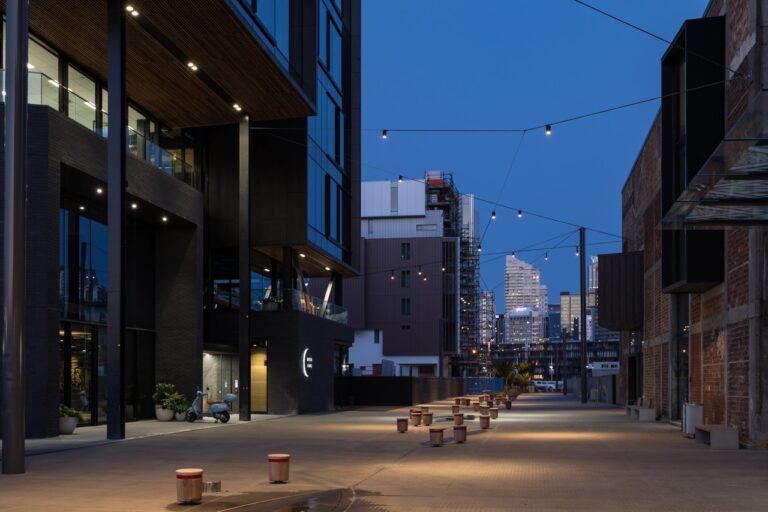
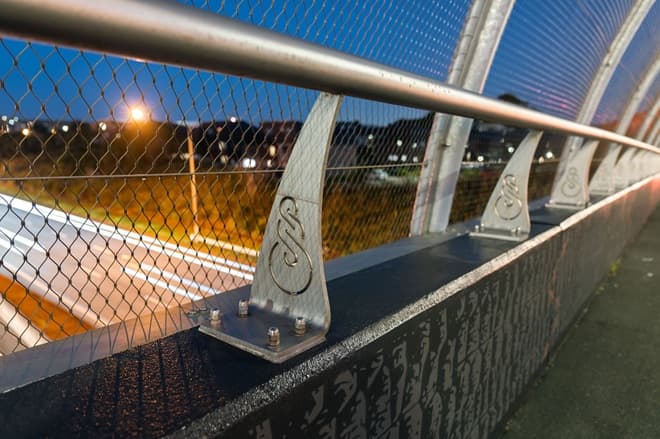
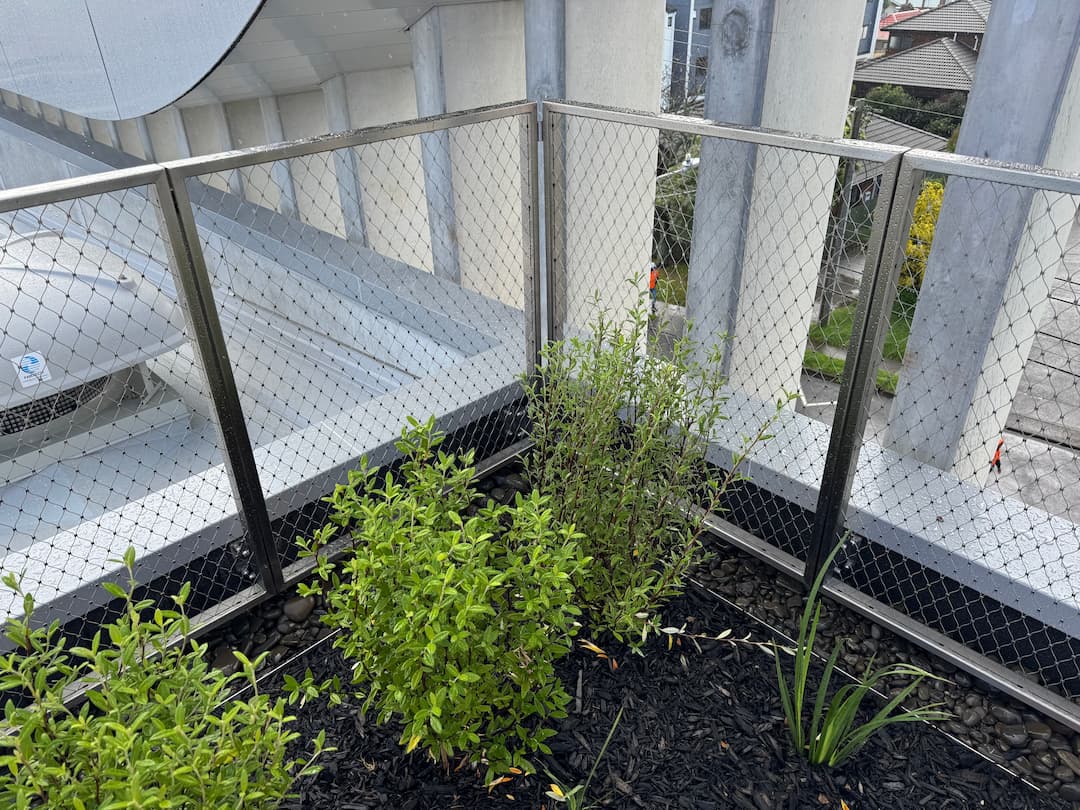
X-TEND® tensile mesh is particularly effective in civil contexts where safety and transparency need to work together. In pedestrian bridges, it can act as a balustrade mesh system that provides fall protection while preserving views and daylight. In transport hubs, it can separate public areas from service zones or define circulation paths without creating a visual barrier that feels institutional.
Read more: Beyond the Railing: Safety Solutions for Bridges
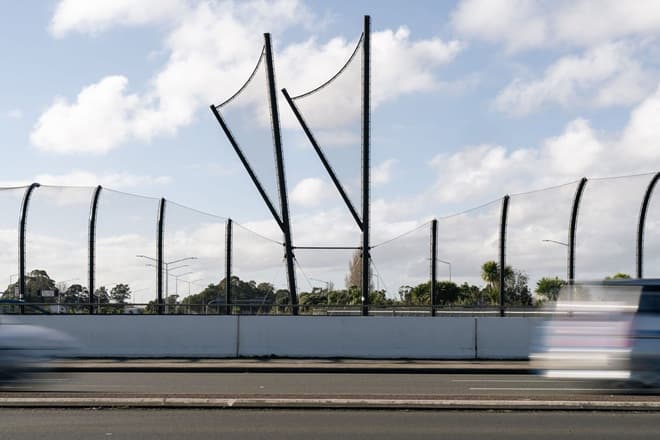
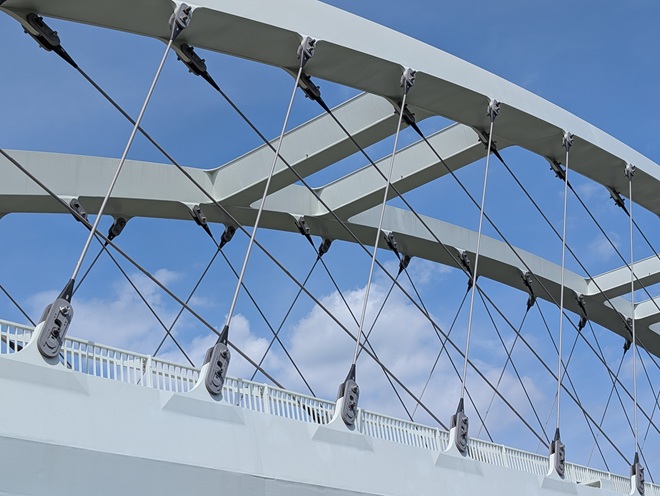
For rail and railway station environments, mesh can help deliver public space fall protection mesh that is robust, durable and easy to maintain. The system can be integrated with lighting, signage and security infrastructure so that the whole environment feels coordinated rather than patched together. On walkways and bridges, it can be used in conjunction with structural rod systems, coated steel balustrades and bespoke fabrication to create a cohesive edge solution.
Whitepaper: Safety and Fall Protection Mechanisms: A Bridge to Safer Public Structures
In all of these cases, the mesh is part of a larger civil engineering strategy. It is not a stand-alone product that is added late. It is a designed component that supports the overall performance of the asset.
Performance in harsh environments
Civil infrastructure in New Zealand is often exposed to coastal air, salt, wind, UV and heavy public use. A mesh system that looks good on day one but corrodes, deforms or fails under load quickly becomes a liability. X-TEND® tensile mesh is engineered for this environment because it uses stainless steel cable and fittings that are designed to resist corrosion and maintain performance over time.
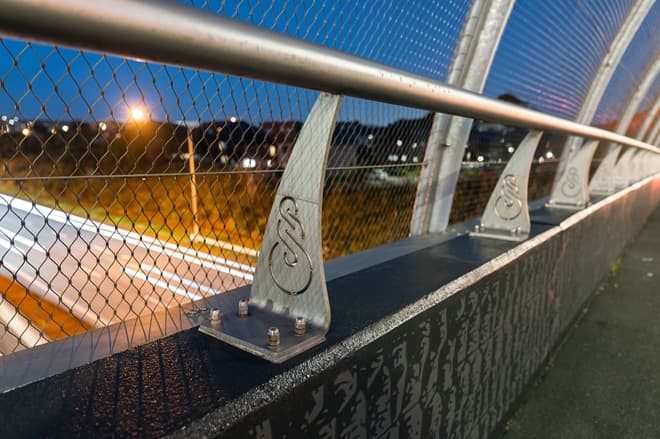
Vandal resistance is another key factor. Public spaces experience impact, abrasion and deliberate misuse. Since the mesh is tensioned and supported by a robust perimeter frame, it does not rely on fragile panels or thin infill that can be bent or removed. That makes it a practical choice for high-traffic areas where maintenance budgets are limited and replacement cycles need to be long.
Maintenance is often a hidden cost in civil projects. X-TEND® tensile mesh reduces that burden because stainless steel and well-specified fixings do not require frequent recoating or replacement. For councils and asset owners, that means lower long-term expense and a more predictable lifecycle for the asset. For engineers, it means the system is more likely to perform as designed without unexpected interventions.
Read more: X-Tend® Tensile Mesh: The Architect’s Guide to Safe, Transparent Design in NZ
Working with councils and consultants
Councils and infrastructure consultants need clear documentation, technical performance data and compliance certainty. That is why X-TEND® tensile mesh is often specified with accompanying load data, material grades, corrosion protection details and installation methodology. The system must be able to be justified in technical submissions, consent applications and tender documentation.
SRS Group supports this process by providing detailed design support, including AutoCAD 3D modelling and 2D drawings generated in-house. That means the team can respond to complex geometry, irregular substrates and site-specific constraints without relying on external parties. The models and drawings can be integrated into the project’s BIM workflow, which helps with coordination and installation planning.
Read more: The future of bridge design and civil engineering

For contract management, SRS is experienced with ANZS 3910 and ANZS 3916 contracts and proficient in early contractor involvement (ECI). That experience is valuable when the project team needs to refine the design, optimise costs and resolve buildability issues before the tender closes. It also helps integrate SRS into the project’s management software, including Procore, Aconex and MS Projects, so that documentation and communication are consistent across all parties.
Safety is another requirement for councils and consultants. SRS’s Sitewise Gold safety record and IRATA certified rope specialists mean that difficult access and working at height can be managed safely, which reduces risk for the project and the client. For civil engineers, that is an important part of the value proposition because safety performance directly affects project risk and insurance.
Read more: 7 Ways X-Tend® Mesh Reduces Risk on Complex Commercial Projects
Producer statements and documentation
One of the strongest advantages of working with SRS is the ability to support the full producer statement pathway. SRS can facilitate PS1 through to PS4 documentation where required, and the company has registered PS3 authors for its own installations. That means the project team can rely on SRS to author producer statements that reflect the actual build method and installation quality.
For councils, this simplifies the approval process. There is a clear line of accountability from the fabricator and installer through to the consent documentation. For engineers, it means the system is backed by a professional who understands the technical and contractual requirements of civil work. For contractors, it reduces the risk of late documentation gaps that can delay sign-off.
This documentation capability is particularly important in public projects where transparency, auditability and compliance are non-negotiable. It also helps when the project needs to be justified to funding bodies, oversight committees or the public.
X-TEND® tensile mesh as the original system
X-TEND® tensile mesh is the leading and original tensile mesh solution in the market and is unbeaten in engineering terms. That matters because the system has been tested in real civil projects, refined through years of use and validated by engineers who understand how tensioned systems behave under load. The originality and engineering strength of X-TEND® give civil teams confidence that the system is not unproven or experimental.
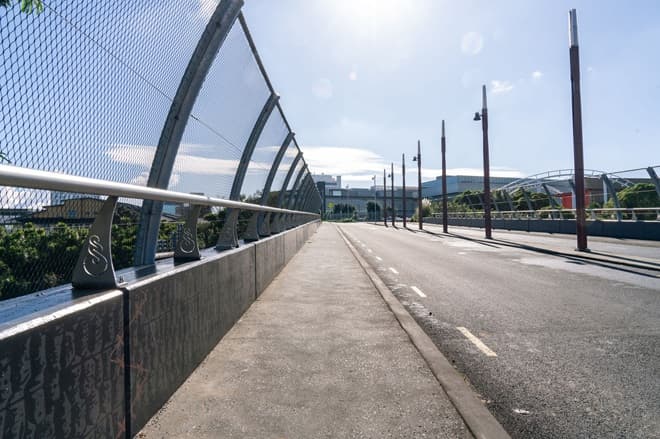
For civil engineers, this means the mesh can be specified with a clear understanding of its structural behaviour, performance limits and installation requirements. It is not a generic product that is chosen for its look. It is a system that has been engineered for the demands of civil infrastructure.
SRS partnership with Ronstan and Carl Stahl
SRS Group’s capability is strengthened by its partnerships with Ronstan Tensile Architecture and Carl Stahl. SRS is the preferred installer for Ronstan in New Zealand and the exclusive distributor of Carl Stahl X-TEND® tensile mesh for Ronstan in NZ. That means the team can access world-class components, technical support and proven systems while applying local installation expertise and project delivery discipline.
Together, Ronstan and SRS create architectural solutions that elevate civil projects and reinforce SRS’s reputation as a trusted provider in New Zealand’s construction industry. The partnership ensures that SRS can offer bespoke rigging and balustrade systems that meet stringent safety standards while still achieving exceptional design outcomes.
For civil projects, this partnership is especially valuable because it brings together the technical credibility of a global manufacturer with the practical delivery capability of a local specialist. That is a combination that councils and consultants respect.
How SRS partners on civil projects
SRS brings cohesive specialist departments in rigging, fabrication and CAD design to civil work, ensuring seamless collaboration across the project lifecycle. The integrated approach enhances efficiency and delivers results tailored to client specifications. A high-quality ethos underpins every project, with rigorous standards for materials and workmanship.
SRS’s technical knowledge allows the team to tackle complex design challenges effectively, while our detail-oriented approach ensures precision in every aspect of the design and installation process. With diverse backgrounds and skills, the team brings multiple perspectives to each project, fostering creativity and innovation. Having established a strong reputation in the industry, SRS is recognised for reliability and expertise in civil infrastructure.
Case examples
SRS’s civil work demonstrates how X-TEND® tensile mesh can be integrated into real infrastructure projects. Tirohanga Whanui Bridge and Barrowcliffe Bridge both show how mesh can support pedestrian bridge safety and public space fall protection without compromising visual openness.
At Kirkbride Road SH20A Intersection, the mesh contributes to a complex transport environment where safety, durability and coordination with other civil elements are critical. Auckland Zoo Te Wao Nui Swing Bridge Upgrade demonstrates how the same principles can be applied in a unique, public-facing setting where safety and user experience must align.
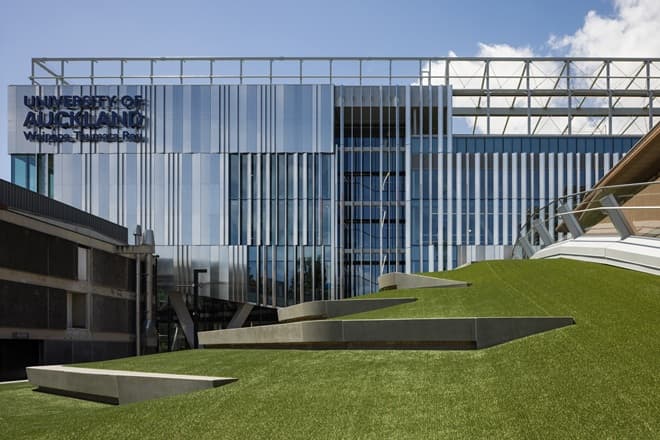
The University of Auckland Sports and Wellness Centre HIWA project also highlights the value of mesh in a large, public building environment where safety and architectural quality are both important. Across all of these projects, the system is not just a visual feature. It is a structural and operational solution that supports the civil engineering intent.
Get in touch
If you are working on a bridge, rail, transport hub or walkway project and need a civil infrastructure safety mesh system that is compliant, durable and well-documented, request a tender consultation with SRS engineers. Start with our X-TEND® Tensile Mesh page (use the filter to find information relevant to the civil sector) and our Fabrication capabilities to understand how the system can be integrated into your project early.
For civil engineers, councils and infrastructure consultants, the best outcomes come from early engagement. SRS can help you assess load conditions, corrosion exposure, documentation requirements and installation strategy before the project moves into tender.
FAQs
Is X-TEND® tensile mesh suitable for civil infrastructure in New Zealand?
Yes. It is designed for harsh environments, public use and long-term durability, making it a strong choice for civil infrastructure safety mesh.
Can X-TEND® tensile mesh be used on pedestrian bridge balustrade mesh NZ projects?
Yes. It is ideal for pedestrian bridges where safety, transparency and durability are all priorities.
What documentation does SRS provide for councils?
SRS can facilitate PS1 through to PS4 documentation and has registered PS3 authors for its installations.
Does SRS support early contractor involvement?
Yes. SRS is proficient with ECI and experienced in ANZS 3910 and ANZS 3916 contracts.
How does SRS handle difficult access and working at height?
SRS uses IRATA certified rope specialists and has a Sitewise Gold safety record for working at height and difficult access.