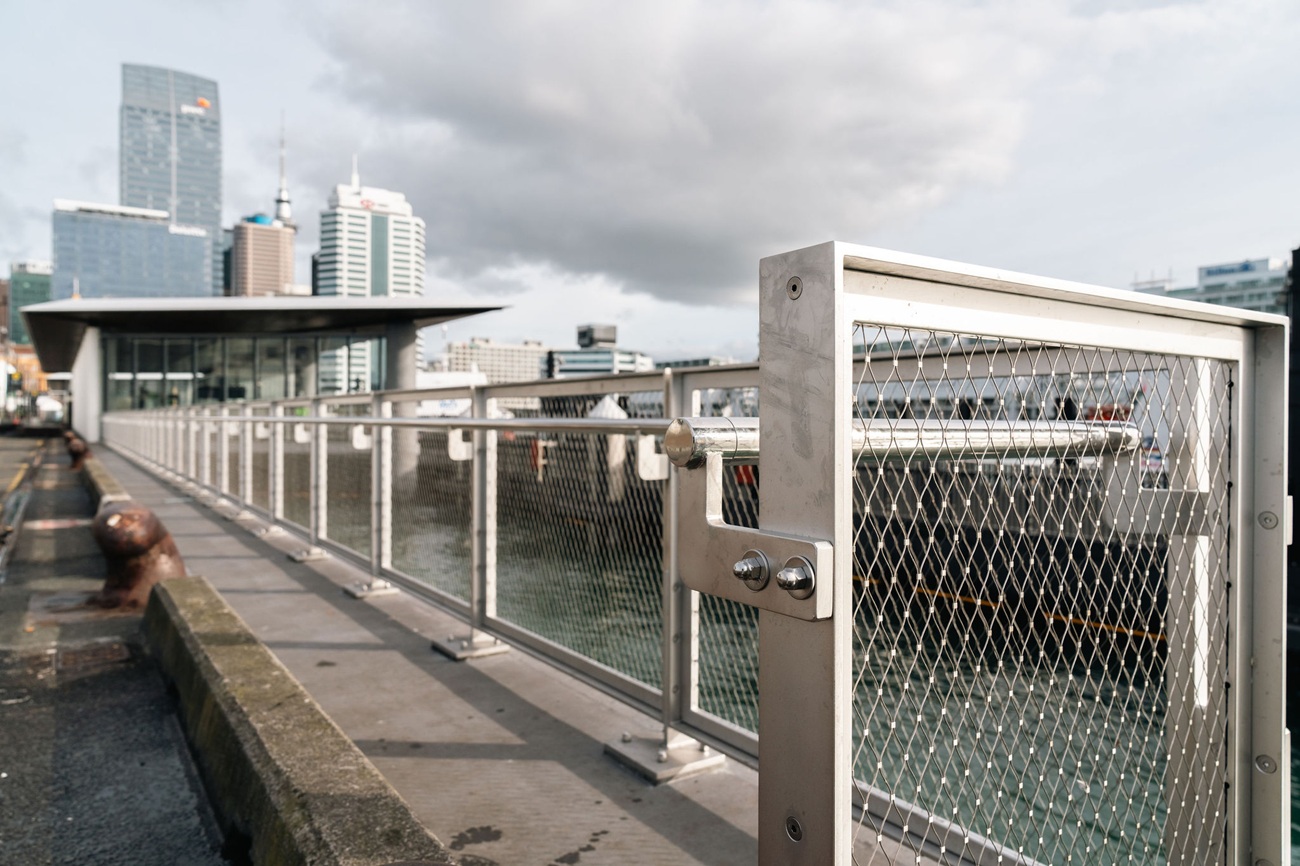
High-traffic balustrades need to do more than mark an edge. In malls, stadia and public infrastructure, they must carry crowd loads, resist impact and vandalism, survive harsh exposure, and still support a clear architectural vision. SRS Group’s balustrades, fabrication and X-Tend tensile mesh capabilities give commercial and civil teams a practical path to commercial balustrade systems NZ that are compliant, durable and built for real-world public use.
Why public balustrades are different
Balustrades in public environments operate under much tougher conditions than their residential counterparts. A stadium, shopping mall or railway station sees thousands of hands, bags, trolleys and bodies pushing against edges every day, so the system has to resist repeated loading, accidental impacts and wear over time. That is why public infrastructure balustrades are as much a structural and maintenance decision as they are an architectural one.
In New Zealand, the relevant design conversation usually starts with the Building Code, particularly requirements around structure, durability and safety from falling. For councils, facility managers and engineers, the key issue is whether the system can keep performing after years of use, weather exposure and public interaction. If the answer is uncertain, the project takes on avoidable risk.
Loads and durability
Public balustrades are often designed around higher crowd load expectations than private residential barriers, especially in platforms, stairs, bridges and viewing areas. That means posts, rails, fixings and substrates need to be selected as a system, not as isolated components. A visually attractive detail is not enough if the concealed fixings, edge conditions or substrate anchorage are underdesigned.

Durability is equally important. A balustrade in a shopping mall may have sheltered conditions but heavy day-to-day contact, while a stadium balustrade mesh system may face hard impacts, cleaning demands and exposure to weather when circulation areas are open to the elements. Railway station environments add another layer of complexity because they combine high traffic with operational constraints, public access and long-life asset expectations. In all of these cases, corrosion resistance, coating durability and maintainability matter as much as initial appearance.
SRS’s fabrication capability is important here because it allows stainless steel and mild steel coated balustrades to be custom-built for the exact environment. That means the team can match material choice to exposure, budget and maintenance expectations rather than forcing one standard solution onto every project. For high-traffic public infrastructure, that flexibility can make a major difference to whole-of-life performance.
Mesh, rods, glass and hybrids
There is no single best balustrade type for every public project. The right choice depends on use, exposure, visual priorities and maintenance strategy. Mesh, rods, glass and hybrids each bring a different balance of strengths to commercial balustrade systems in NZ.
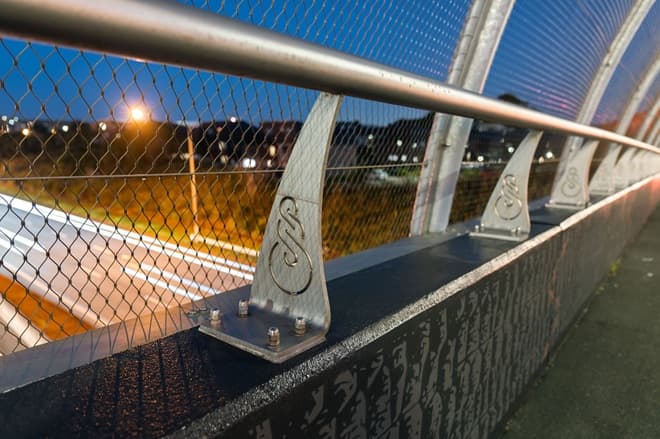
X-TEND® tensile mesh is especially effective where visibility, safety and durability must work together. In public realm projects, it delivers transparency without the fragility of glass and without the visual weight of solid steel infill. That makes it a strong option for stadium balustrade mesh applications, waterfront edges and elevated walkways where openness matters.
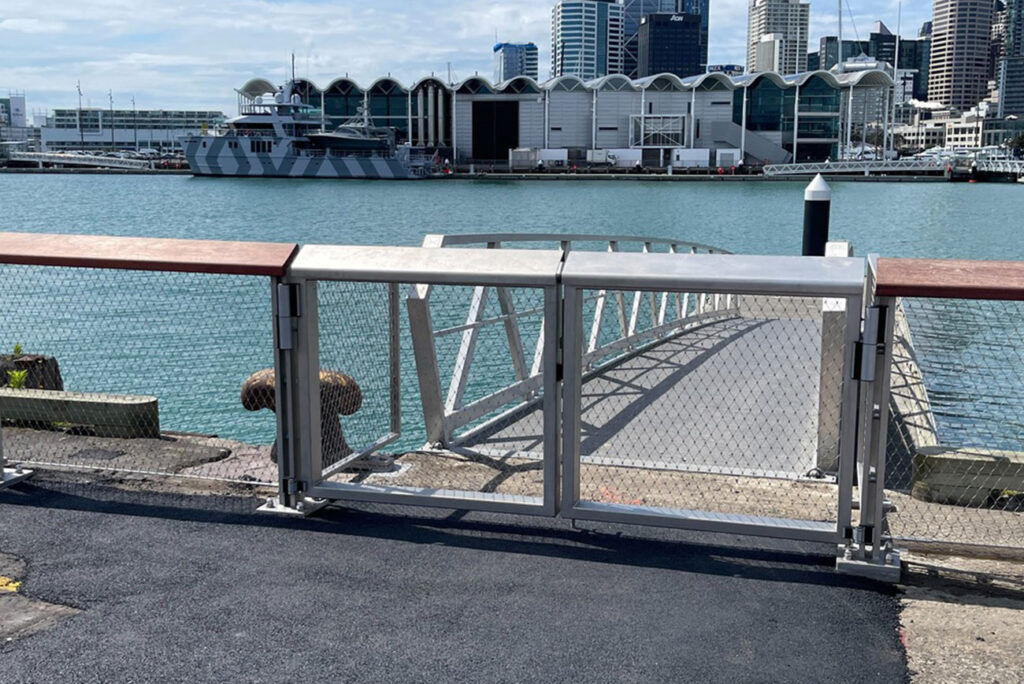
Rod systems are often selected when designers want a minimal profile and a precise architectural expression. They can work well in stair runs, bridge edges and interior public spaces where the emphasis is on slenderness and clean lines. Glass offers excellent transparency and a polished, premium look, but it can be more maintenance-sensitive in vandal-prone or heavily used environments. Hybrids, combining mesh, rods, glass and coated steel, are often the smartest answer when a project has more than one performance requirement at once.
For commercial and civil teams, the design question is not which product is fashionable. It is which system can survive the real conditions of the site while staying aligned with the architectural intent.
Selecting the right system
A typical project conversation might begin with a shopping mall redevelopment, where the developer wants open sightlines across a mezzanine but also needs robust edge protection and quick installation to minimise disruption. In that case, a mesh-based system may be preferred because it offers transparency, strong durability and a lighter visual presence. If the same project includes a premium entry void, the team might combine mesh with glass or rods to create a more refined threshold.

A stadium project looks different again. The balustrade must support large volumes of movement, crowd pressure and cleaning access, while also coping with a demanding visual environment. Here, stadium balustrade mesh can be an effective choice because it provides a secure barrier without blocking sightlines or creating a bulky frame that interferes with circulation and viewing.
A railway station or transport interchange adds yet another layer. The system must handle repeated use, comply with platform and access requirements, and often coordinate with lighting, wayfinding and security systems. In that environment, a custom balustrade solution often needs to balance robustness, visibility and ease of maintenance more carefully than in any other public setting.
How SRS reduces risk
SRS Group approaches public infrastructure balustrades as a complete delivery problem, not just a product choice. The process starts with custom designs, drawings and systems tailored to the actual project conditions. That means the team can respond to complex geometry, irregular substrates, corrosion exposure and difficult access without compromising safety or engineering performance.
Producer statements are a major part of this value proposition. SRS can facilitate PS1 through to PS4 support where required, and the company authors PS3 producer statements for its own installations. For councils, consent teams and project managers, that simplifies the approval pathway and improves confidence that the balustrade system has been properly considered from concept to installation. It also means the documentation is grounded in the actual build methodology rather than being an afterthought.
SRS can also provide budget-friendly design options without compromising safety or engineering. That matters on public projects where funding and procurement pressures are real, but the performance expectations remain high. By combining in-house fabrication, a wide range of stainless fittings and fixtures from marine and commercial suppliers, and full onsite installation, SRS can help project teams reach the right balance between capital cost and long-term value.
For difficult-access environments, the company’s IRATA-certified rope specialists add another layer of capability. That is especially useful on bridges, facades, elevated civic assets and waterfront structures where working at height must be managed carefully. The ability to fabricate, install and maintain from one integrated team helps reduce handover friction and keeps accountability clear.
Case-style examples
SRS’s public and civil work shows how the right system choice changes project outcomes. At Queens Wharf Western Edge, the team delivered a marine-grade stainless-steel balustrade system paired with Carl Stahl X-Tend® tensile mesh to preserve views while meeting stringent fall-protection expectations. That is a strong example of how commercial and civil design teams can combine transparency and safety in a waterfront environment.
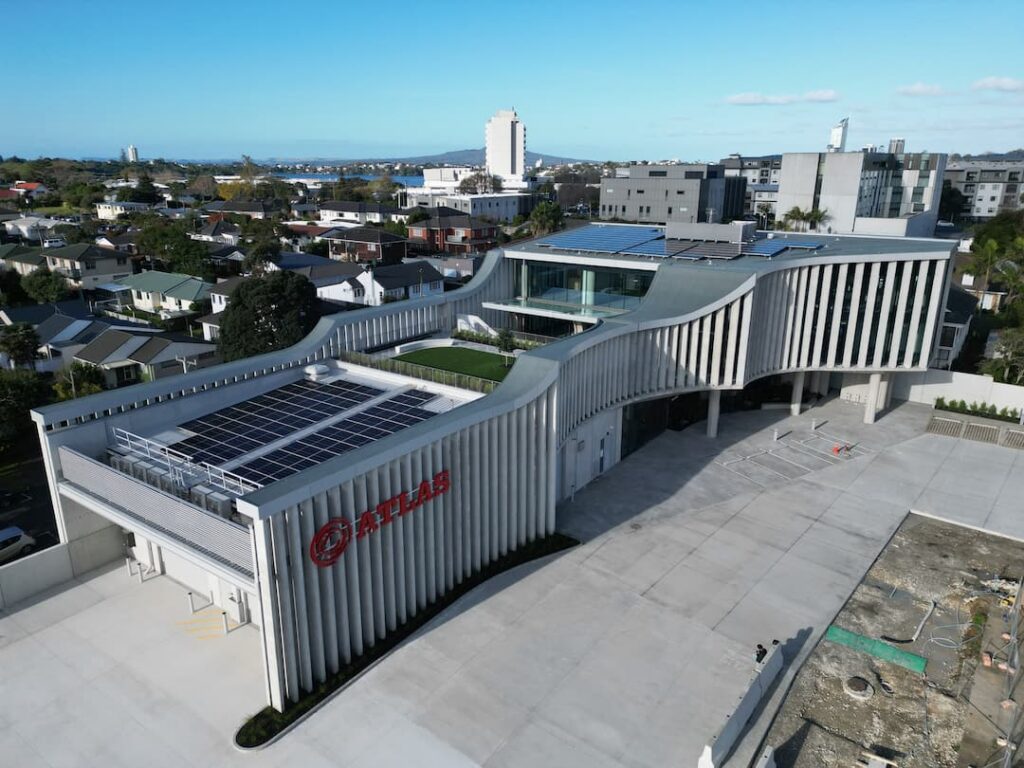
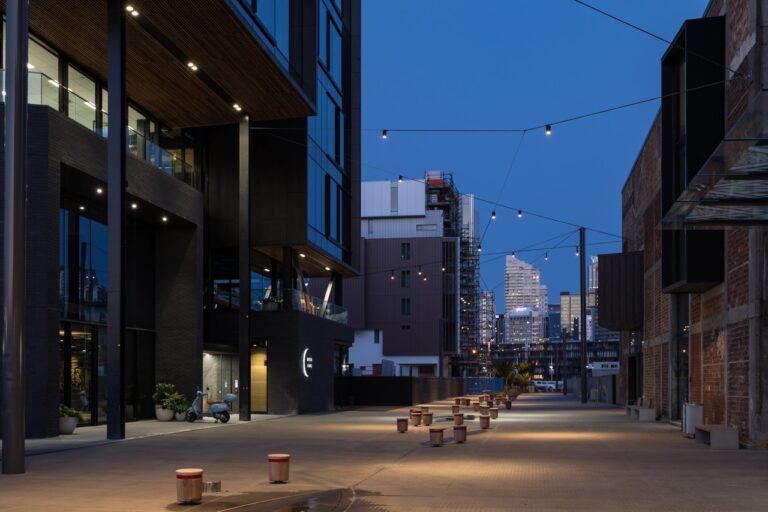
Atlas House Headquarters demonstrates how a corporate public-facing environment can benefit from carefully coordinated balustrade and fabrication work. The project reflects the importance of a solution that looks refined, installs cleanly and performs under daily use. Barrowcliffe Bridge and Tapuwae Northcote Bridges both underline the value of robust public infrastructure detailing where the balustrade is part of the user experience as well as the safety system.
Westhaven Promenade is another useful reference point because it shows the need for systems that can cope with coastal exposure, public circulation and architectural expectations all at once. Across these projects, SRS’s use of X-Tend® tensile mesh in public spaces and its fabrication expertise create a consistent theme: design ambition, practical delivery and long-term durability can all sit in the same solution.
Why councils and contractors care
For councils, the key question is asset performance over time. They want systems that are safe, maintainable and justifiable in the approval process. For contractors, the issue is buildability, procurement certainty and a package that can actually be installed without site drama. SRS addresses both by combining design support, fabrication, installation and documentation in a single workflow.
That is a competitive advantage because many balustrade suppliers only solve one piece of the puzzle. SRS works across the full delivery chain, which reduces the chance of gaps between design intent and site reality. In public environments, those gaps are where problems usually begin.
Get in touch
If you are planning a stadium, shopping mall or railway station project and need a balustrade that can handle crowds, exposure and compliance pressure, start with the SRS Balustrades page. Then request a project review with SRS engineers so the team can assess load conditions, access constraints, materials and documentation requirements early in the process.
For commercial balustrade systems NZ and public infrastructure balustrades, the best outcome is usually the one that is resolved before procurement begins. With SRS’s fabrication, X-Tend® tensile mesh and installation expertise, you can turn a demanding public edge into a reliable part of the architecture.
FAQs
What makes public infrastructure balustrades different from residential balustrades?
They need to withstand heavier use, higher crowd loads, more impact risk and more demanding maintenance conditions.
Is X-Tend mesh suitable for stadium balustrade mesh applications?
Yes. It is a strong option where transparency, durability and public safety need to work together.
Can SRS help with council approvals?
Yes. SRS can provide documentation and producer statement support, including PS3 authoring for its installations and assistance across PS1 to PS4 where needed.
What if the project has budget constraints?
SRS can propose budget-friendly design options that still meet engineering and safety requirements.
Does SRS handle difficult access installations?
Yes. The team includes IRATA-certified rope specialists for working at height and hard-to-access sites.