Coastal balustrades in NZ need to do three things at once: protect people, preserve views and survive a brutal marine environment. For high-end homes in places like Waiheke Island, Omaha, Matakana and Auckland’s North Shore, the best balustrade for sea air is usually a bespoke marine-grade balustrade NZ solution that is engineered for exposure, detailed for compliance and built to last.
The romance and the reality
The appeal of coastal living is obvious. A deck looking out over the Hauraki Gulf, a balcony above a sheltered bay or a clifftop terrace above open water creates a sense of openness that few other settings can match. Yet the same sea air that gives those views also punishes exposed materials, which is why coastal balustrade NZ projects need a different level of care than inland homes.
For discerning homeowners and designers, the challenge is to keep the sightlines clean without creating a maintenance headache or a compliance problem. That means the balustrade cannot be chosen as an afterthought. It must be designed as part of the architecture, the structure and the environment all at once.
SRS Group approaches that challenge as both a fabrication problem and a marine-exposure problem. The result is a balustrade strategy that is built to resist salt, wind and time, while still allowing the architecture and the view to take centre stage.
Coastal exposure changes everything
The invisible enemy in coastal projects is not just rain. It’s salt-laden air, wind-driven spray, crevice moisture and the fine accumulation of contaminants that sit on fittings and in joints. If the wrong metals, finishes or fixings are used, tea-staining and crevice corrosion can start to show surprisingly quickly, particularly around welds, fasteners and hidden pockets where salt can collect.
Wind is another major factor. Coastal decks and balconies are often more exposed than homeowners expect, and balustrades must be able to resist those loads while also satisfying NZ Building Code Clause F4 safety expectations and the broader structural requirements under B1. In some high-exposure situations, load ratings and fixing design also need to reflect wind intensity and occupancy conditions so the barrier performs safely under real-world use.
Maintenance is the final piece. A high-end holiday home or permanent coastal residence should not require constant scrubbing, ongoing rust treatment or repeated hardware replacement. The best balustrade for sea air is one that is engineered to reduce upkeep from the start, not one that simply looks good in a brochure.
Why marine grade matters
“Marine grade” is not a marketing phrase when the site is exposed to salt and wind. It is a baseline expectation for material performance, finish quality and detailing. Grade 316 marine-grade stainless steel is the common starting point for a marine-grade balustrade NZ project because it offers strong corrosion resistance in coastal conditions.
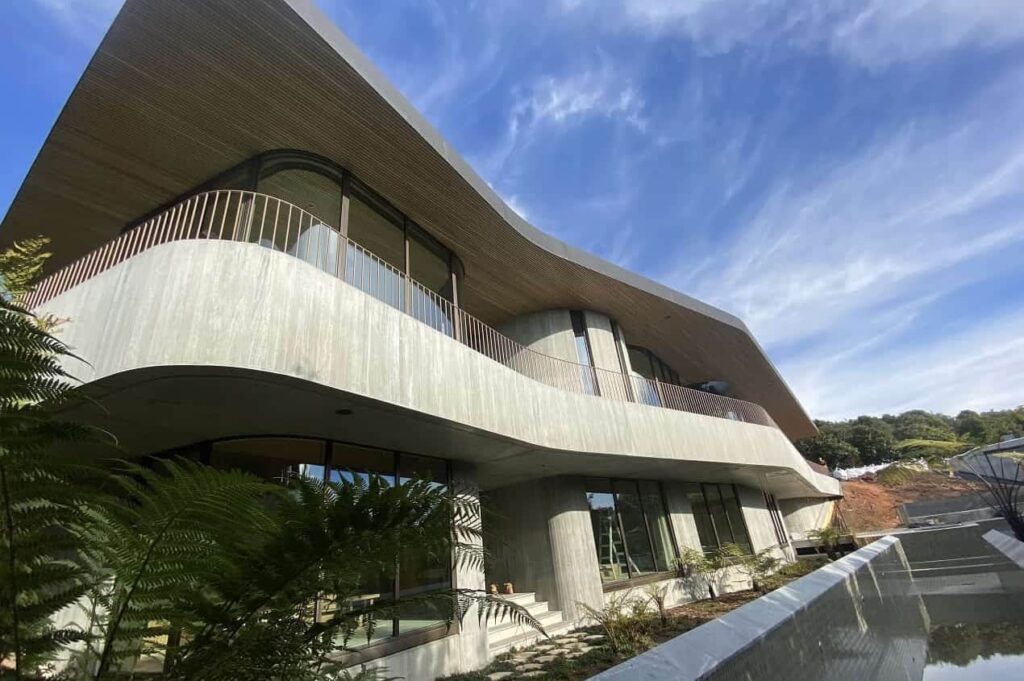
Even then, the finish matters. Passivation and electropolishing can improve performance by refining the surface at a microscopic level, reducing the places where salt and contaminants can cling. That is especially useful in exposed coastal environments where a visually clean finish needs to stay clean for longer. These treatments do not eliminate maintenance, but they make the system far more resilient and forgiving.
For some projects, Duplex 2205 may be the right option where higher strength or enhanced corrosion resistance is required. The key is not to specify the cheapest available part, but the system that matches the environment, geometry and expected service life. That is where SRS’s technical role becomes important, because the team can compare materials, finishes and fixing strategies in practical terms rather than theoretical ones.
Balancing views and safety
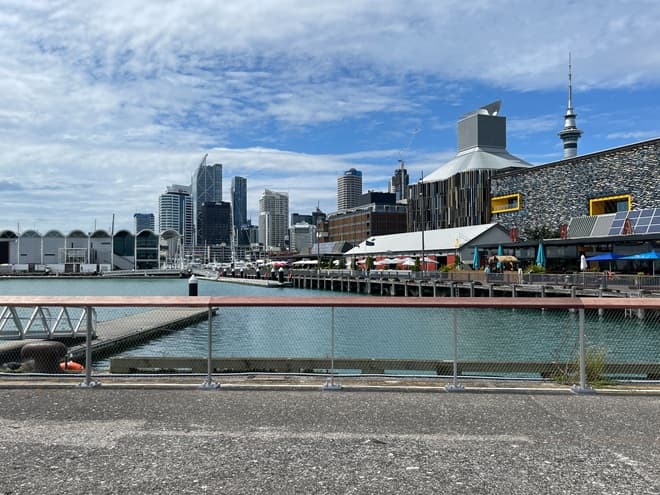
A good coastal balustrade should keep the user safe without making the view feel boxed in. That’s why stainless steel wire balustrade systems are often preferred for contemporary coastal architecture. They create a light visual profile, preserve the horizon line and avoid the visual weight of bulky elements that compete with the landscape.
Ronstan Tensile Architecture is an important partner in this space, and SRS Group’s collaboration with Ronstan gives clients access to a refined range of architectural cable solutions. The Ronstan Balustrade and Railing Cables Catalogue is a valuable technical resource for homeowners, architects and builders who want to explore ultra-slim tensioned wire infills that keep the focus on the sea view while still delivering a structurally sound barrier.
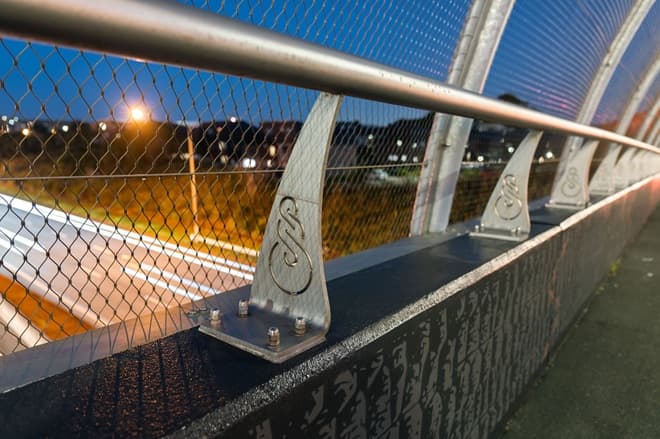
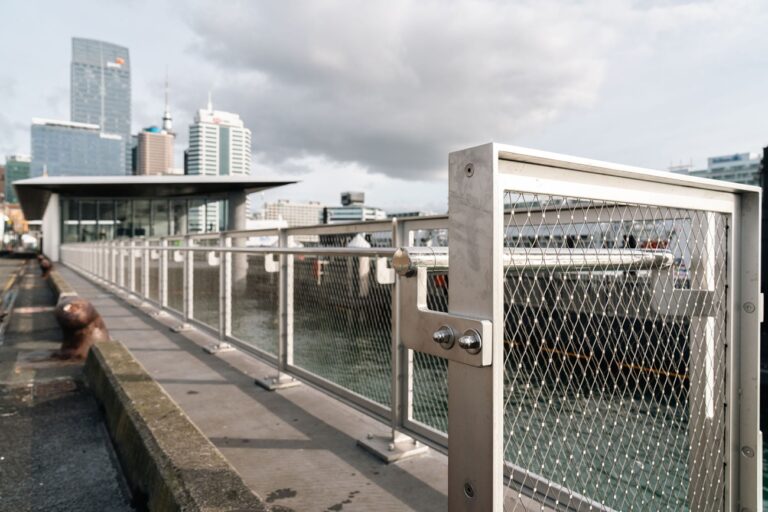
X-TEND® tensile mesh is another strong option where the design brief asks for transparency, durability and a more continuous architectural plane. In some settings, the right answer may be a hybrid: a wire or mesh infill with custom stainless steel posts and carefully detailed top rails. The goal is always the same. Safety must be clear, but the balustrade should never overwhelm the view.
Designing for decks, stairs and pools
On decks and balconies, the best coastal balustrade solutions tend to use slim posts, tensioned horizontal wires or mesh infills that minimise obstruction. That keeps the horizon line clean and allows the architecture to feel open, even when the barrier is doing serious work. For a Waiheke residential balustrade, that visual lightness is often just as important as the engineering.
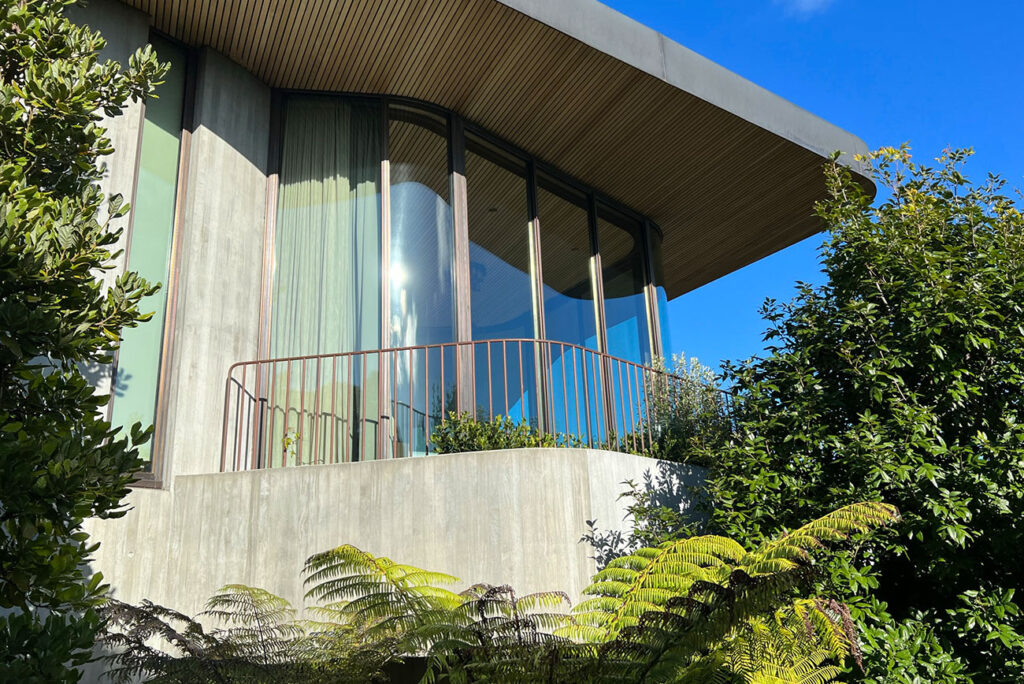
Stairs are another opportunity to unify the design language. If the house transitions from a sheltered internal stair to a wind-exposed viewing deck, the balustrade should feel cohesive from one space to the next. Consistent detailing across the route helps the home feel calm and deliberate rather than pieced together from different hardware systems.
Pool surrounds need the same careful balance. Safety requirements are non-negotiable, but a high-end coastal landscape should still feel refined and integrated with the architecture. Cable or mesh systems can provide a secure edge without making the pool area feel closed off, which is especially valuable in premium homes where landscaping, paving and water views are part of the overall composition.
How SRS approaches coastal work
SRS Group’s approach starts with the site, not the catalogue. The team looks at exposure category, substrate type, structural frame material and the geometry of the deck, stair or balcony before recommending a system. Concrete, steel and timber substrates all behave differently, and each requires a different fixing strategy to achieve long-term reliability in a marine environment.
Architectural collaboration is central to the process. SRS works with architects, designers and builders to ensure compliance is designed in from the beginning rather than patched on later. That includes providing Producer Statements where required, including PS1 and PS3 support, so the design pathway and installation pathway remain aligned with the project’s approval needs.
Luke Tempest’s marine-rigging background is especially relevant in this context. His experience in highly demanding environments helps SRS think about tolerance, corrosion, load path and finish quality as interconnected issues rather than separate tasks. That mindset is one reason the company is trusted on demanding coastal projects where the details matter as much as the overall look.
“On a coastal project, you are never just choosing a balustrade. You are choosing how the building will age in salt, wind and sunlight. If the system is not detailed correctly, the coast will show you very quickly.” – Luke Tempest, Managing Director, SRS Group
SRS’s fabrication capability gives the team further control over the final result. Custom stainless steel and mild steel balustrades can be fabricated to suit the exact geometry and material palette of the home, which is especially valuable where raw concrete, timber and steel are intended to sit together as part of the architecture. That level of integration is difficult to achieve with off-the-shelf products.
“The workshop stage is where the quality is won. If the welds, joins and finish are right there, the installation goes more smoothly and the balustrade reads as part of the architecture rather than a separate product.” – Sven Lizamore, Fabrication Manager, SRS Group
What the Waiheke project shows
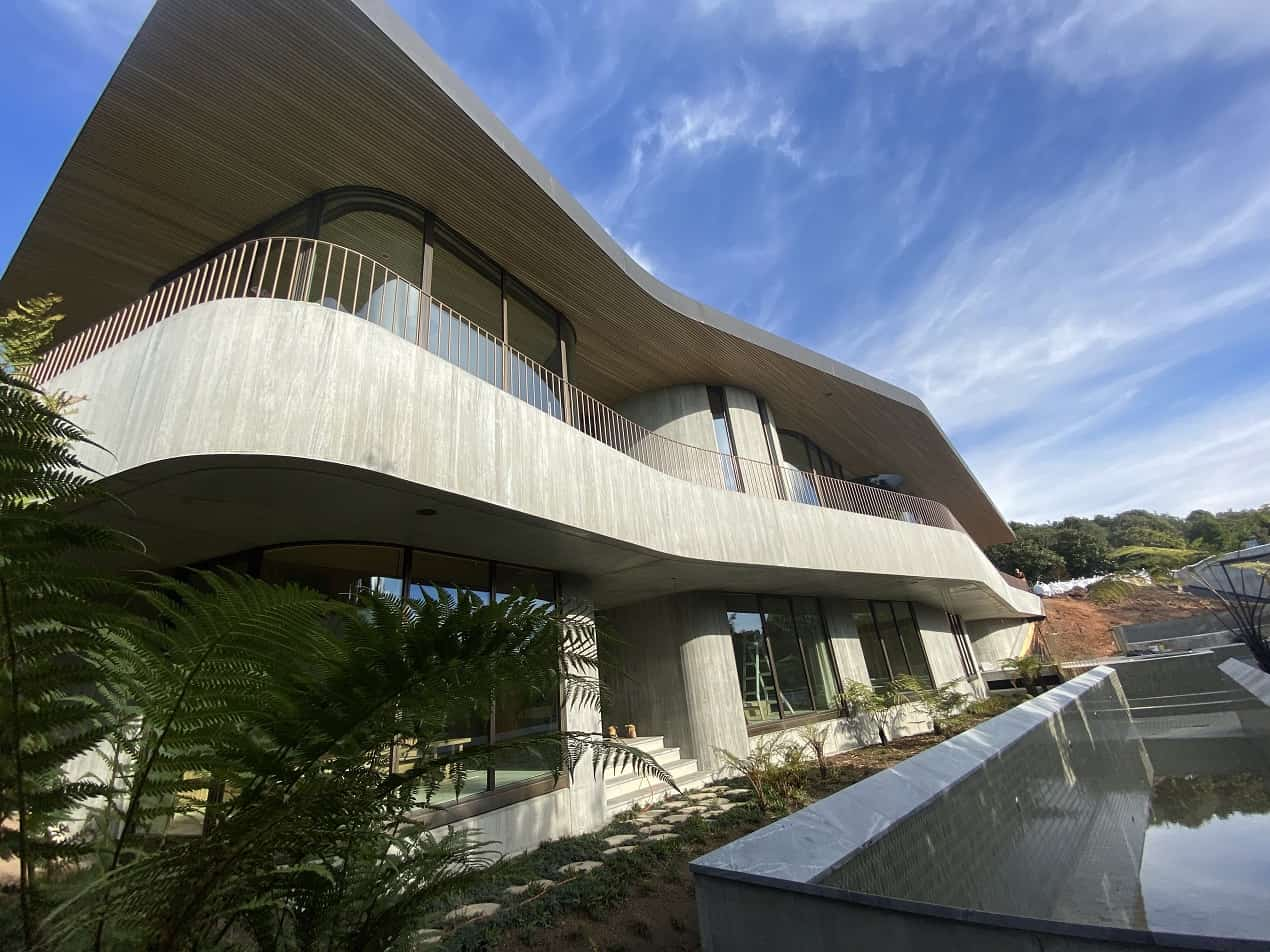
The Architecturally Designed Home on Waiheke Island is a good example of how all of these considerations come together in practice. The site’s exposure to wind and salt spray demanded a system that would preserve uninterrupted ocean views while remaining structurally robust and visually restrained.
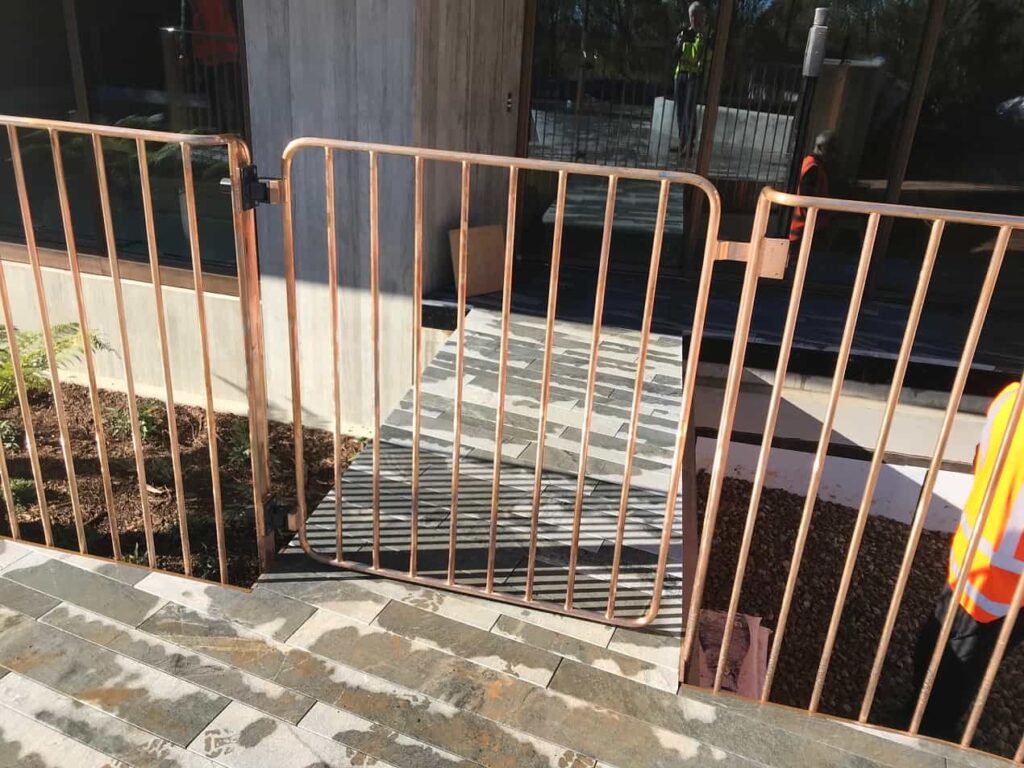
In that setting, the balustrade had to resolve the tension between raw architectural materials and precise steel detailing. Concrete and timber substrates created a strong, tactile backdrop, while the balustrade needed to read as a clean, purposeful edge rather than an intrusive barrier. The result demonstrates how bespoke engineering can protect the view rather than fight it.
“Our role on a project like Waiheke is to make the balustrade disappear into the architecture, without compromising safety or durability. If the client looks out to sea and notices the view first, we have done our job properly.” – Ben Grenfell, Rigging Manager, SRS Group
That kind of work also underlines why early involvement matters. When the balustrade is coordinated with the deck structure, substrate and exterior detailing from the start, the final result is stronger, cleaner and easier to maintain.
Choosing the right path
For homeowners, the decision comes down to more than appearance. The right marine grade balustrade system needs to meet NZ Building Code Clause F4 compliance, withstand B1 structure demands and stay stable under the site’s wind and exposure conditions. It also needs to suit the architecture and lifestyle of the home, because a balustrade that is visually heavy or high-maintenance will quickly diminish the sense of coastal luxury.
For architects and premium builders, the advantage of working with SRS is that the company can bring design intent, fabrication depth and marine-rigging discipline into one conversation. That makes it easier to choose between wire, mesh, stainless steel or hybrid solutions based on performance rather than assumption. It also helps ensure the balustrade is a long-term asset instead of a future problem.
“A good coastal balustrade has to satisfy everyone at once. The architect wants the view, the builder wants buildability and the client wants confidence that it will still look right in ten years. That is the brief we work to every day.” – Roydon Gilmour, Technical Advisor & QS, SRS Group
Call to action
If you are planning a coastal home and want a balustrade that can survive sea air without sacrificing the view, start with a technical conversation early. SRS Group can help you compare systems, review site conditions and align the design with compliance and durability requirements before you commit to a final detail.
Download the Ronstan Balustrade and Railing Cables Catalogue to explore tensioned wire options, then book an on-site balustrade consultation with the SRS Group technical team to workshop your plans for a Waiheke residential balustrade, a North Shore terrace or any other exposed coastal project. For coastal balustrades NZ, the safest and most elegant outcome is usually the one that is engineered from day one.
Coastal Balustrades FAQs
What is the best balustrade for sea air?
The best balustrade for sea air is usually a bespoke marine-grade balustrade NZ solution using Grade 316 stainless steel or another appropriately specified material with corrosion-resistant detailing and finishes.
Is 316 stainless steel enough for coastal homes?
It is often the correct baseline, but the final answer depends on exposure, geometry, maintenance expectations and whether additional treatments such as passivation or electropolishing are needed.
What makes coastal balustrades NZ fail early?
Common failure points include poor detailing, trapped salt in crevices, unsuitable fixings, lack of surface treatment and inadequate consideration of wind or substrate movement.
Can I use glass on a coastal deck?
Yes, but glass needs to be chosen carefully because it can demand more cleaning and detailing in salt-spray zones than wire or mesh alternatives.
Does SRS provide compliance support?
Yes. SRS can work with architects and builders on Producer Statements and compliance-focused design development, including PS1 and PS3 support where required.