Catenary lighting uses tensioned cables and suspended luminaires to create safe, atmospheric night-time environments without the visual clutter of poles and bulky street infrastructure. For commercial, civil and high-end residential projects, it’s a powerful urban design tool that improves ambience, preserves a clear ground plane and supports safer movement through laneways, plazas and waterfronts.
What is catenary lighting?
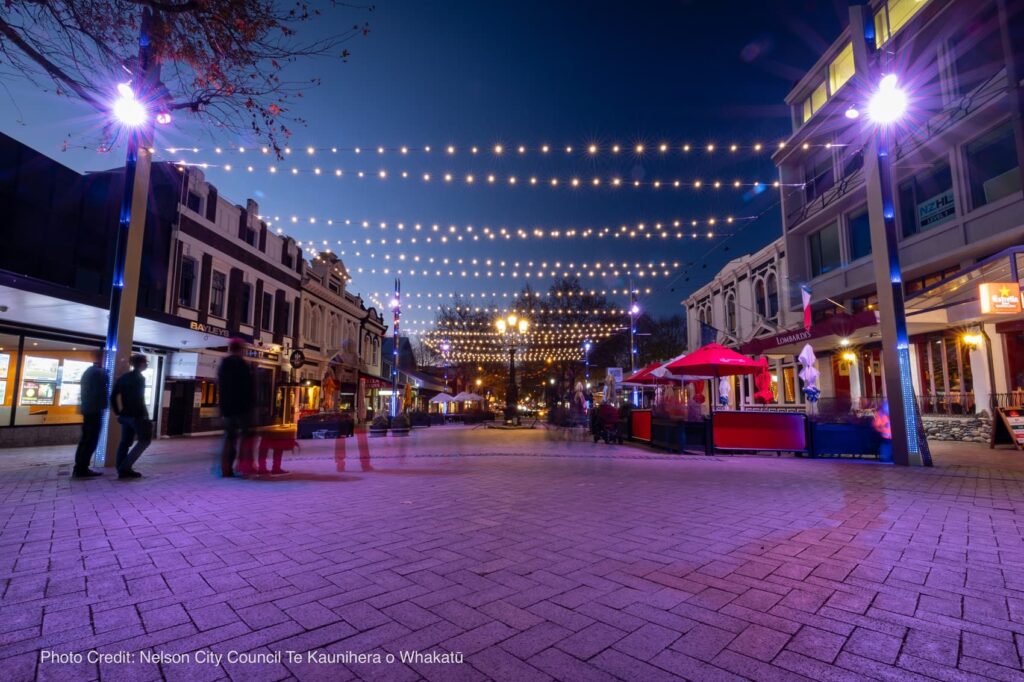
Catenary lighting is a suspended lighting system where lights are supported from cables stretched between buildings, poles or custom structures rather than from vertical street light columns. The name comes from the catenary curve that a suspended cable naturally forms under tension, which is why these systems are often called tensile lighting systems. In practical terms, the cables carry the load and the luminaires hang at carefully calculated positions to provide light where people move, gather and socialise.
For urban planning, that matters because the lighting infrastructure itself becomes part of the design language of the street. Instead of filling a precinct with poles, arms and cabinets, a catenary system can create a softer overhead layer that feels more integrated with the architecture. It’s one of the reasons catenary lighting NZ projects are increasingly used in dining streets, public squares and waterfront environments.
How it works
A typical suspended street lighting system relies on a combination of structural anchors, tensioned stainless steel cable assemblies, custom bracketry and luminaires selected for the site. The cables are engineered to take the dead load of the lights and the dynamic effects of wind and movement, while bespoke end fittings and suspension points keep the system secure and aligned. Because the load is transferred through tension, the design has to be precise from the outset.
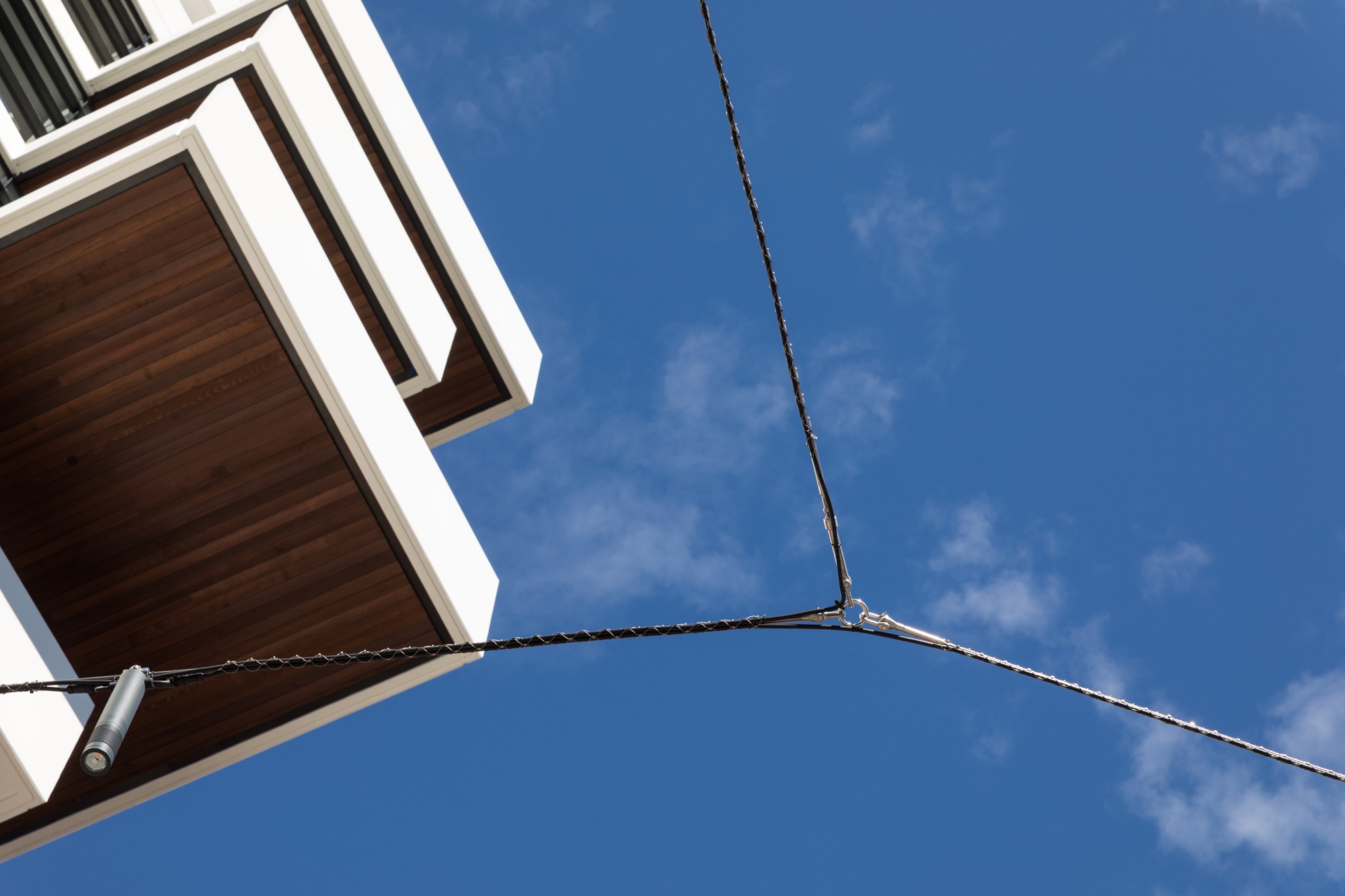
That precision is where specialist input becomes critical. The sag, span, anchor positions and fixing details all need to be calculated as a system rather than as individual parts. SRS brings that capability through in-house CAD design, structural analysis and fabrication, which allows the team to detail cable networks for real site conditions rather than relying on generic kits. For commercial and civil projects, that means fewer surprises on site and a cleaner final result.
Why it beats poles
Traditional poles are still useful, but they are often visually intrusive in dense urban settings. They occupy ground space, interrupt sightlines and can limit how a plaza or laneway is used. Catenary lighting offers a different proposition because it lifts the lighting infrastructure overhead and preserves a clear ground plane for tables, pedestrians, events and landscaping.
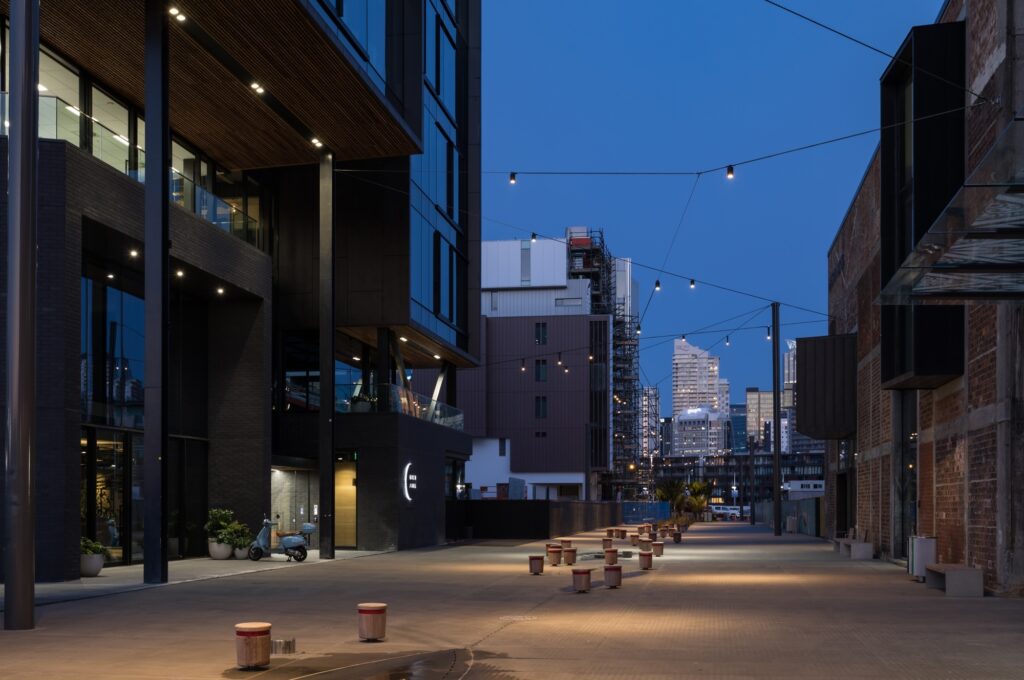
Safety is another advantage. In some environments, columns can create obstacles for crowds, deliveries and maintenance access. Suspended systems help reduce clutter at ground level, which is especially valuable in public space where movement needs to remain open and intuitive. The ambience benefit is equally important. A well-designed tensile lighting system can define a precinct after dark, creating a sense of intimacy and vibrancy that is difficult to achieve with pole-mounted street light infrastructure alone.
There is also a planning benefit. Councils and designers often want lighting that supports night-time activation without overwhelming adjacent uses or the character of the place. Catenary systems can be tailored to control light spill, frame views and support the identity of a street or square. That makes them a strong tool for urban designers who want functionality and atmosphere in the same solution.
Discover more by downloading Carl Stahl’s X-LED Archirtectural Illuminations brochure.
Typical NZ applications
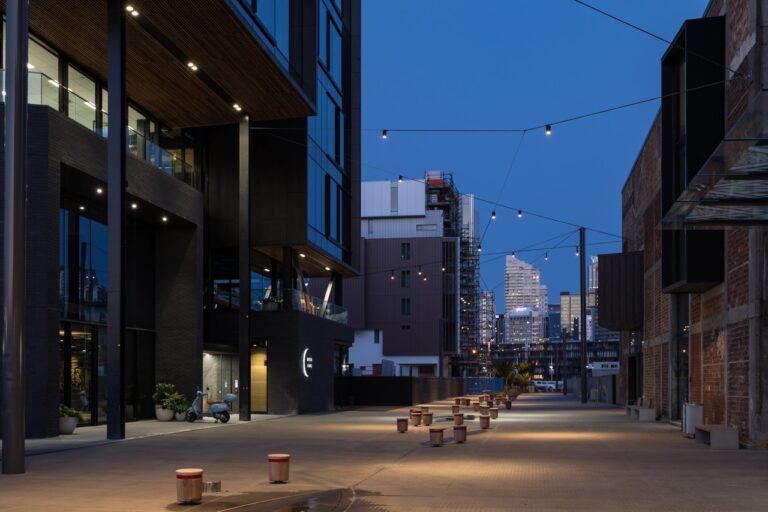
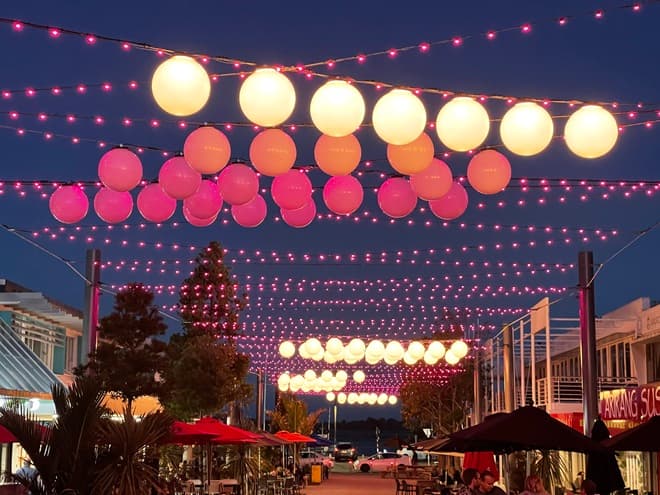
In New Zealand, catenary lighting is especially effective in laneways, plazas and waterfront precincts where there is a strong pedestrian focus and a desire to keep the space visually open. Dining streets benefit because the system avoids clutter at table height while creating a warm, inviting canopy above. That is why projects like Wharf Street Tauranga and Taupo Town Centre have used catenary systems to support evening activation and social use.

Waterfronts are another natural fit. Coastal environments often need robust, corrosion-resistant systems that can withstand wind and exposure while supporting a refined public realm outcome. SRS has demonstrated this in projects such as Upper Trafalgar Street Nelson, Queenstown Alliance and Tiramarama Way, where suspended lighting helped define the space without dominating it. The same logic applies to high-end residential and mixed-use developments that want a premium exterior environment without relying on rows of poles.
For commercial settings, catenary lighting can also support hospitality courtyards, retail forecourts and internal laneways that need a distinct evening identity. In each case, the lighting is doing more than illuminating. It is shaping how the public space feels and how people choose to use it after dark.
Design and compliance
Catenary lighting is not just a visual exercise. It sits at the intersection of urban planning, street light design and engineering compliance. Councils often require lighting to be designed in line with AS/NZS 1158 principles or equivalent approved methods, with attention to safety, glare, spill light, energy use and pedestrian movement. That means the designer has to think about both illumination levels and the broader urban context.

SRS supports this through structural analysis and PS1 engineering services, which help anchor the system to a credible technical pathway. The team also produces custom cable network designs and on-site fabricated cables to exact dimensions, with sag and tension verified using Loos gauge readings for QA. For councils and consultants, that level of documentation is valuable because it provides clarity around performance, installation and ongoing maintenance.
The project also has to account for the way the system interacts with buildings and the public realm. Suspension points, bracketry and anchorage positions need to be resolved so they do not compromise facades or adjacent services. That is where SRS’s fabrication and rigging capability becomes important, because the lighting system is often only one part of a larger architectural package.
SRS’s delivery model
SRS stands out because we combine integrated specialist teams across rigging, fabrication and CAD design. That means the people who understand the structure are also involved in the detailing and the installation strategy. The benefit is a smoother handover from concept to construction and a lower risk of disconnect between design intent and what actually gets installed.
Quality is another differentiator. SRS uses certified, sustainable materials and works with trusted manufacturers of high-strength stainless steel cable assemblies and fittings. Our approach is also supported by a highly experienced team, including Director Luke Tempest, whose leadership helps connect rigging discipline with architectural and urban design thinking. For complex site conditions, that combination of technical knowledge and practical delivery is especially valuable.
Installation is carried out by experienced rigging professionals, with Working at Heights and MEWP certified team members managing access and safety. That matters because catenary systems often need to be installed in active streets, busy public spaces or difficult-access environments. SRS also offers ongoing inspection and maintenance services, which helps clients protect the life of the asset and keep the system performing as intended.
Case studies and proof
SRS’s catenary lighting work is well represented across New Zealand public realm projects. Wharf Street Tauranga shows how a dining precinct can gain identity and ambience through overhead suspended lighting. Taupo Town Centre demonstrates the flexibility of a catenary cable system in a civic setting where the evening environment matters to local business and public use.
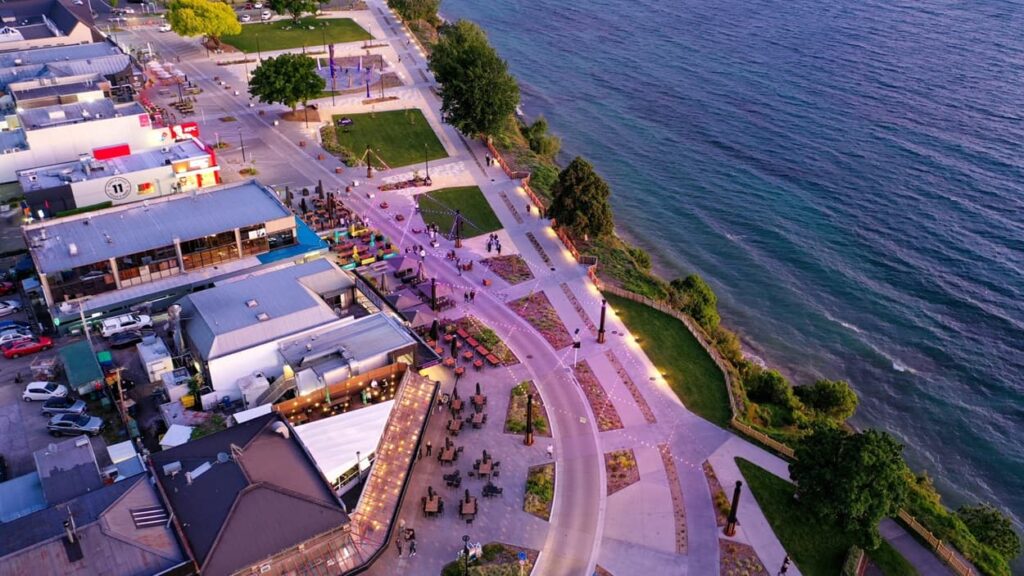
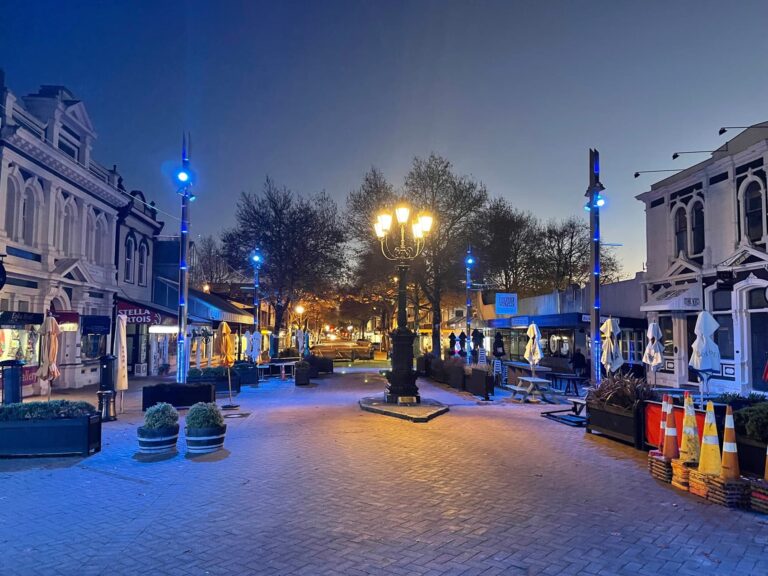
Upper Trafalgar Street Nelson, Queenstown Alliance, Tiramarama Way and George Street Dunedin further show how tensile lighting systems can be adapted to different climates, urban characters and project goals. A particularly relevant endorsement comes from LandLAB, which noted that SRS consistently delivered well-resolved shop drawings, proactive problem-solving and workmanship to a very high standard across a range of public realm projects. Ethan Reid, a Landscape Architect with LandLAB went on to say, “They regularly exceed our expectations and have proven to be an anchor of reliability and craftsmanship on every project. I can recommend the SRS team without reservation.”
That kind of third-party confidence is important when a system is being relied on to perform in exposed, high-visibility environments.
Brochure Download: Ronstan Catenary Lighting and Structures for the Public Realm
Why it matters now
As cities focus more on night-time economy, pedestrian safety and placemaking, catenary lighting in NZ has become a valuable urban design response. It helps activated spaces feel safer and more welcoming while keeping the ground plane open for movement and use. For councils, that supports public realm outcomes. For commercial owners, it can improve foot traffic and atmosphere. For residential and mixed-use projects, it adds a premium character that feels considered rather than imposed.
SRS is well positioned to deliver these outcomes because it understands the technical, aesthetic and operational demands of suspended street lighting. With fabrication, rigging, CAD, structural analysis and installation all under one roof, the company can take a project from concept through to maintenance with a clear line of accountability. That end-to-end model is what makes the difference in complex urban settings.
Next Steps
If you’re planning a laneway, plaza, waterfront or mixed-use public space and want a lighting solution that delivers atmosphere without clutter, catenary lighting is worth serious consideration. Download the SRS catenary lighting whitepaper summary to explore the technical and design principles behind the system, then speak with the team about how it could support your project.
For commercial, civil and high-end residential developments, the right tensile lighting systems can transform how people experience a place after dark. SRS Group can help you design, fabricate, install and maintain that system with confidence.
Catenary Lighting FAQs
What is catenary lighting?
It is a suspended lighting system where luminaires are carried on tensioned cables rather than poles or columns.
Where is catenary lighting most effective?
It works especially well in laneways, plazas, waterfronts and other pedestrian-focused public spaces where visual clutter needs to be minimised.
Is catenary lighting suitable for councils?
Yes. It can be designed to align with local lighting provisions and AS/NZS 1158-style requirements, with careful control of spill, glare and pedestrian safety.
Why choose SRS for suspended street lighting?
Because SRS combines custom cable network design, fabrication, engineering support and installation expertise in one delivery model.
Does SRS provide maintenance support?
Yes. SRS offers ongoing inspection and maintenance services to help protect system performance over time.
This post has been written in collaboration with members of the SRS Team.