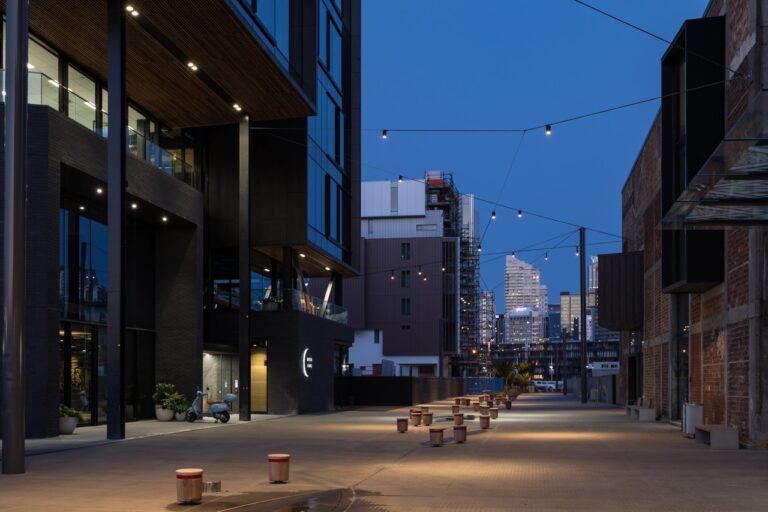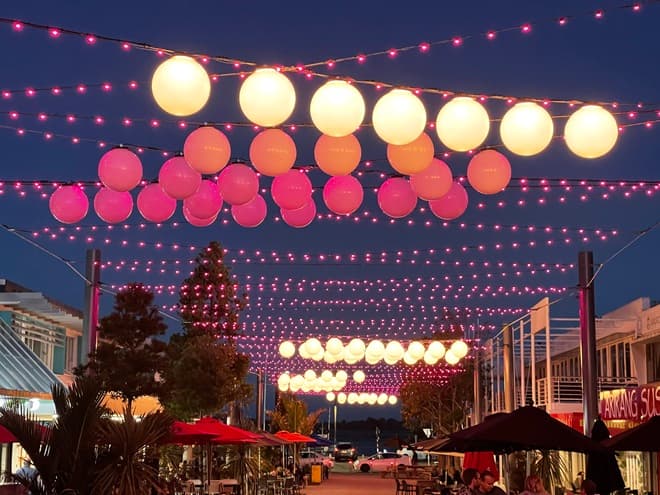
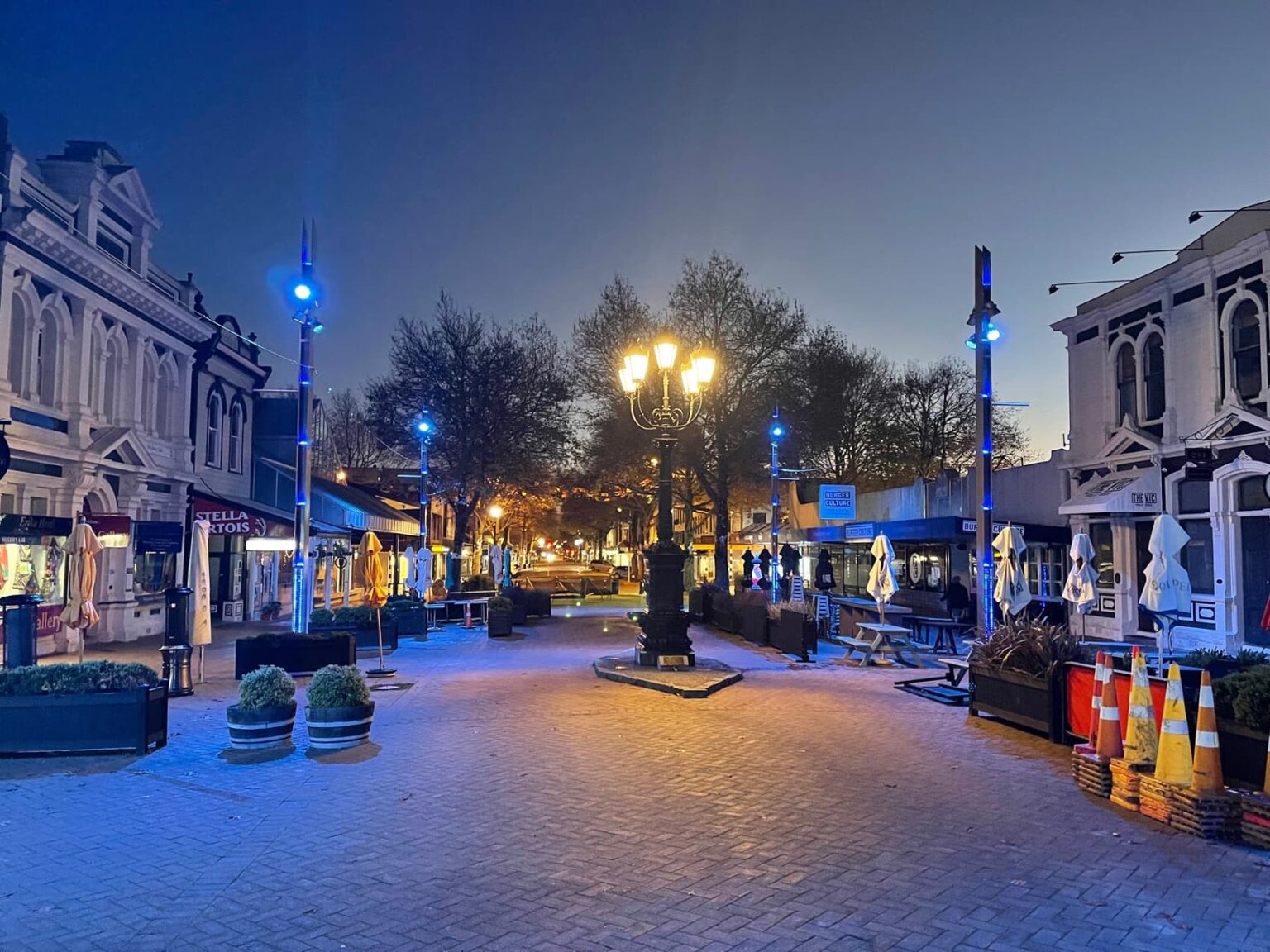
Catenary lighting transforms urban spaces by lifting illumination into the air, preserving a clear ground plane and creating a more inviting night-time environment. The real work, though, happens in the engineering: cable geometry, tension loads, wind exposure, seismic movement and long-term maintenance all have to be designed as one system.
Introduction
Across Auckland and other growing urban centres, city-makers are moving away from bulky lighting columns and toward more open, flexible public spaces. Catenary lighting supports that shift by suspending light fixtures from high-tensile cables, creating a floating canopy of light that feels both modern and human-scaled. The result is a public realm that is easier to activate, more visually coherent and often safer to move through at night.
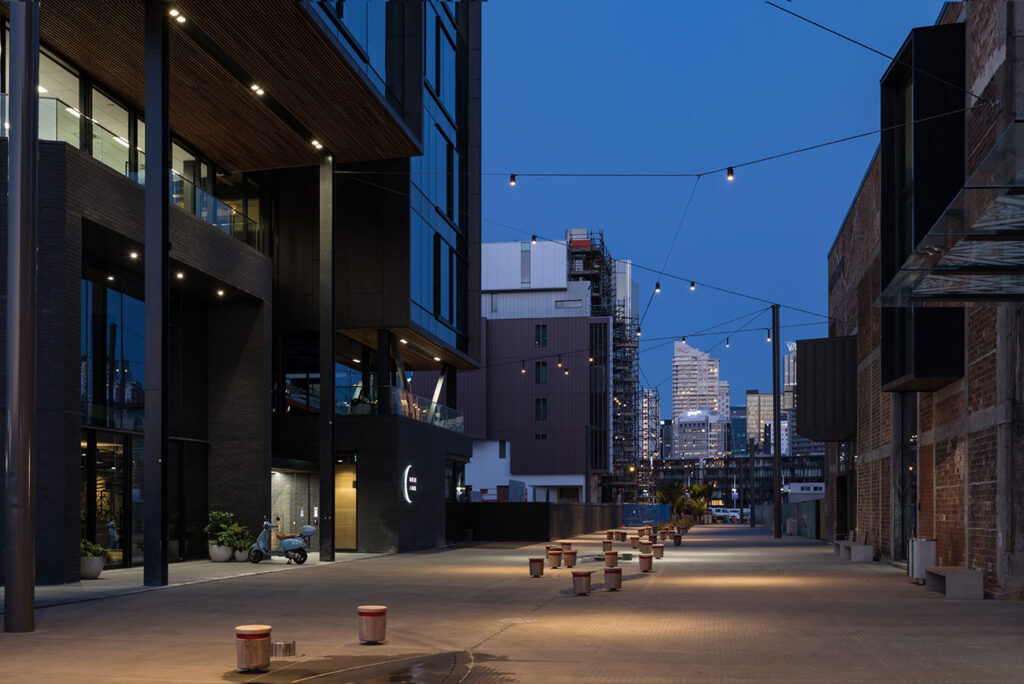
But the best catenary lighting does not happen by accident. It requires a careful balance of architectural intent, structural logic and maintenance planning. That is especially true in coastal cities like Auckland, where wind, salt exposure and site-specific constraints can quickly expose any weakness in the design. For civil contractors, property developers and council project managers, the key is not simply whether catenary lighting looks good on a rendering. The key is whether the system can perform reliably for years in the real world.
Mastering cable geometry
At the heart of catenary lighting is the catenary curve itself, the natural sag formed by a cable suspended between two anchor points. In practice, lighting cable geometry is not an aesthetic detail. It is the structural language of the entire system. The sag-to-span ratio, often in the range of roughly 2 per cent to 5 per cent depending on design intent and loading conditions, is what helps balance appearance, tension and performance.
If the cable is pulled too tight in an effort to look perfectly straight, the tension forces at the anchor points rise sharply. That can create unnecessary stress in the substrate, the fittings and the structural supports. In urban lighting engineering, that small visual decision can have significant consequences. A cable that appears elegant to the eye may be overloading its anchors if the geometry has not been calculated correctly.
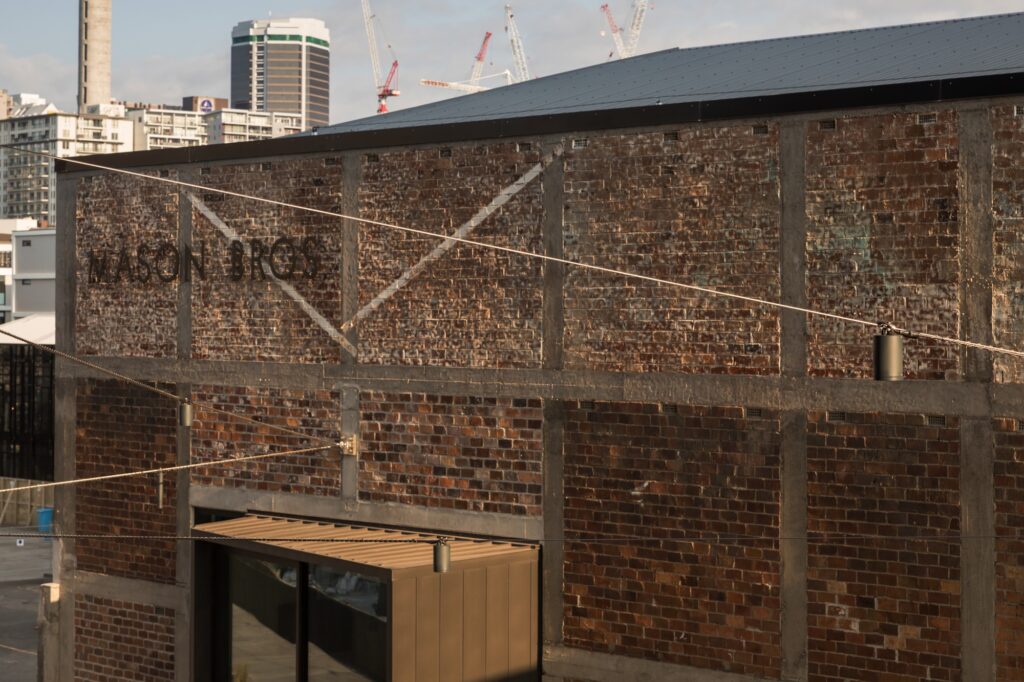
This is where precise planning matters. SRS Group approaches catenary layouts by mapping cable geometry in detail before anything is fabricated or installed. As Roydon, our GS and Technical Advisor, often frames it, the point is not to “make the cable straight”, but to make the system work as a coordinated structural form. That means careful spatial planning, accurate dimensional control and early checks against the real site conditions in Auckland, not just the idealised drawing.
Auckland projects frequently have irregular spans, existing building interfaces and complex public realm constraints. A geometry that works in theory can fail in practice if the spans are altered at the last minute or the anchor heights are not coordinated with surrounding architecture. Good catenary lighting design guide principles start with geometry because geometry determines everything else.
Calculating structural loads
Once the geometry is resolved, the next challenge is load. Suspended lighting systems are carrying more than a visual effect. They are carrying dead loads, environmental loads, dynamic movement and, in New Zealand, seismic considerations. All of these need to be addressed together if the system is to remain safe and durable.
Dead loads include the weight of the 316-grade stainless steel cables, connections, junction boxes and the luminaires themselves. Even though each component may be relatively light on its own, the cumulative load across a full installation can be significant. Add tensioning hardware, maintenance allowances and any secondary attachments, and the numbers start to matter very quickly.
Wind loads are particularly important in Auckland. The city’s coastal setting exposes catenary wire systems to gusts and pressure changes that can produce lateral and dynamic forces. A suspended system behaves a little like a sail. That does not mean it is unsuitable for the environment, but it does mean the design must assume movement and pressure rather than pretend the system will remain static. Wind load calculations are therefore central to any commercial outdoor lighting design that uses overhead suspension.
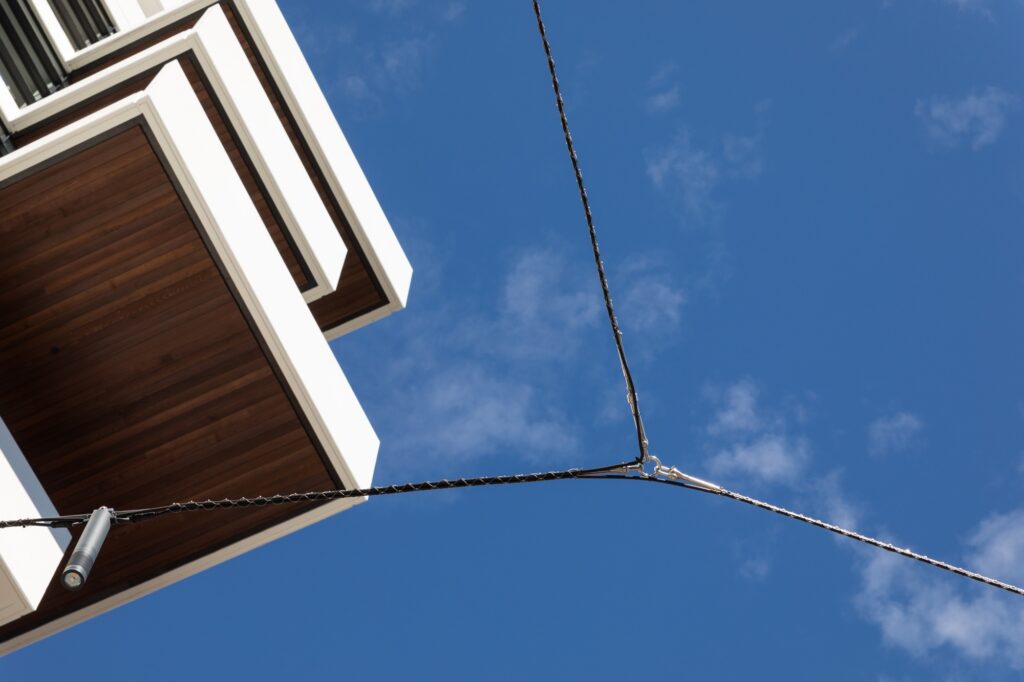
Seismic and dynamic loads also need to be considered. New Zealand’s environment requires structural systems to cope with movement, and catenary lighting is no exception. The anchors, fittings and cable network must work with the structure rather than against it. As Luke, our Director, often points out, “the strongest cable in the world is only as good as what it is attached to”. A lighting system fails when the anchor points are underdesigned, the substrate is not rated for the calculated tension loads, or the interface with the building has not been verified by structural engineering.
“You can have the strongest cable in the world, but if the substrate or structural anchor point isn’t rated for the calculated tension loads, the system fails. We work hand-in-hand with structural engineers to certify every fixing.” – Luke Tempest, Director, SRS Group
That mindset is one of the reasons SRS is trusted in structural rigging Auckland projects that involve public realm lighting, complex site staging and high visibility. The company’s role is not only to fabricate and install the system, but to make sure the design is supportable from the first structural assumption through to final sign-off.
“What we like about SRS is that the technical detail is always there from day one. The communication is clear, the safety culture is strong and the systems are delivered with professionalism in every phase of the job.” – Adam Rickit, PFS
Material selection for Auckland
In Auckland’s saltwater-laden air, material choice is non-negotiable. Marine-grade 316 stainless steel rigging is the baseline for exposed catenary systems because it offers the corrosion resistance needed for coastal and urban waterfront conditions. For fittings and tensioning components, swaged terminations, heavy-duty turnbuckles and correctly specified anchor hardware are essential. Weak links at this level are rarely forgiving.
The material strategy also has to account for long-term service life. Cables may appear simple, but if the wrong grade or finish is used, salt and contaminants will shorten the life of the system and increase maintenance costs. This is why SRS tends to treat catenary lighting as a full structural assembly rather than a collection of parts. Every component has to be compatible with the others and with the environment.
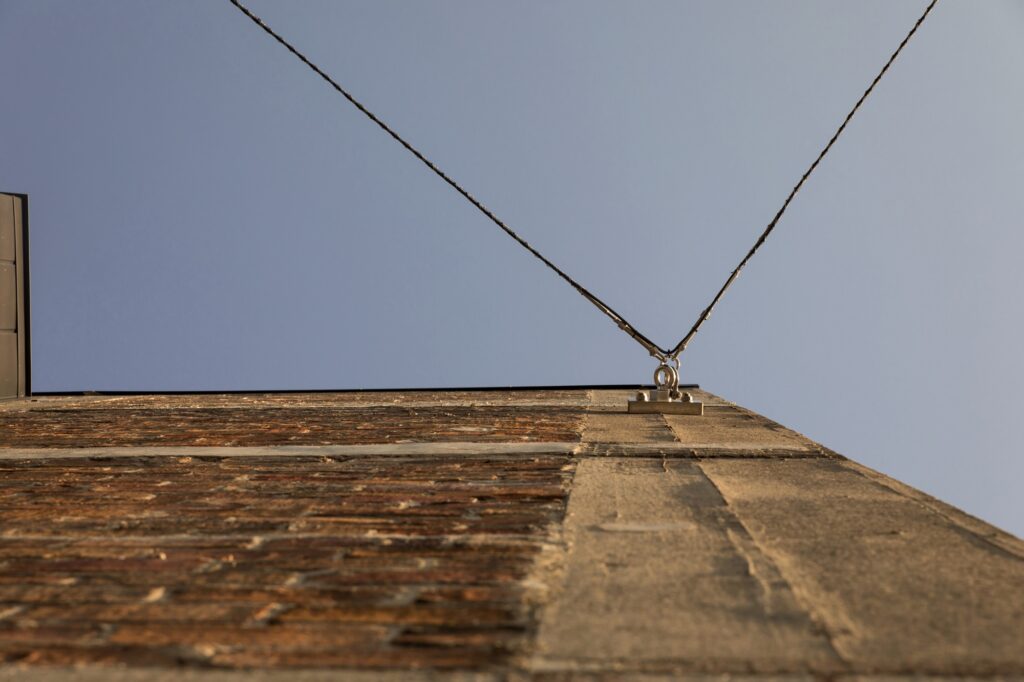
That approach is informed by the company’s broader experience in tensile architecture solutions, rigging and fabrication. Luke’s marine and superyacht background means the team is used to working with high-performance stainless systems where detail and durability matter. In the words of one of SRS’s long-term collaborators:
“Luke and the team are a standout in the industry when it comes to high-quality stainless rigging. They’re solutions-focused, highly skilled and easy to work with on technically demanding projects.” – Llewellyn Morgan, Edgesmith
For projects in places like Wynyard Quarter, Britomart or Viaduct Harbour, that sort of rigging discipline is especially useful. These are not sites where a temporary-looking solution will do. The hardware must support the architecture, survive the climate and retain its quality over time.
Maintenance and safety over time
A catenary lighting design guide should never stop at installation. The system has to be maintainable, inspectable and safe over its full service life. That means designers need to think about how lights will be replaced, how cable tension will be checked and what happens if the surrounding building moves or settles over time.
Built-in maintenance mechanisms are important here. In some systems, accessible tensioners or winching arrangements can make it easier to adjust or service the network without major disruption. The exact solution will depend on the site, but the principle is consistent. If maintenance is difficult, it will eventually be delayed. If maintenance is delayed, asset performance declines.

Routine structural inspections are also essential. Cables can stretch slightly over time. Buildings can move. Fixings can loosen. Even small changes matter in a suspended system where geometry, load and visual alignment are linked. Councils and building owners therefore need a plan for periodic review, not just a handover document. That is especially true in public realm public lighting, where a failure is visible to everyone and can create both safety and reputational risk.
SRS’s role in this stage is to provide ongoing inspection and maintenance support where required, backed by the same rigging and fabrication expertise that informed the original design. That continuity helps keep the system aligned with its original structural assumptions. It also gives project owners a clearer understanding of lifecycle costs, which is often just as important as initial capital spend.
“We’ve seen SRS consistently deliver outstanding quality and attention to detail over a long period of time. Their solutions are practical, well-engineered and always backed by a strong problem-solving mindset.” – Daryl Gregg, Contrax Greenscapes
Why this matters in Auckland
Auckland’s public spaces demand lighting that does more than illuminate. They need urban design that supports safety, placemaking and commercial activation without cluttering the environment. Catenary lighting is a strong response to that need because it keeps the ground plane open and creates a more atmospheric overhead experience.
But the system only succeeds when the engineering is right. Catenary lighting design depends on geometry, tension loads, wind loads, material selection and maintenance planning all being resolved together. When those pieces align, the result is elegant, durable and capable of enhancing public spaces in a way that poles often cannot.
For councils, developers and consultants, that is the real value of specialist input. It reduces risk, clarifies compliance and produces a lighting solution that supports the broader vision of the project. For SRS, it is also a chance to combine architectural rigging, bespoke fabrication and practical installation into one coherent service.
Of course, we have also worked on a number of catenary lighting projects outside of Auckland including:
- Wharf Street, Tauranga
- Taupo Town Centre
- Upper Trafalgar Street, Nelson
- Queenstown Alliance
- George Street, Dunedin
Next Steps
If you are planning a civic, commercial or waterfront lighting project in Auckland or anywhere across the country, now is the right time to bring specialist rigging expertise into the conversation. The SRS Catenary Lighting Solutions page is the best place to start if you want to understand how geometry, load calculation and long-term maintenance come together in a real project.
Lighting consultants, civil contractors and engineers can collaborate with SRS Group on the next stage of their catenary lighting project by reviewing cable geometry, structural anchor points and maintenance requirements early. That is where the best outcomes begin.
Catenary Lighting FAQs
What is catenary lighting and how does it work?
Catenary lighting is a suspended lighting system where fixtures are hung from tensioned cables between structural anchor points, creating overhead illumination without the need for traditional poles.
Why is cable geometry so important in catenary lighting design?
Cable geometry determines the sag, tension and overall load behaviour of the system. If the cables are too tight or too loose, it can affect both the appearance and the structural performance.
What materials are best for catenary lighting in Auckland?
316-grade stainless steel is typically the preferred material because it offers strong corrosion resistance in coastal and salt-exposed environments.
How are wind and seismic loads managed in catenary lighting systems?
The system must be engineered to account for dead loads, wind loads and seismic movement, with anchors and fittings designed to handle the calculated tension forces safely.
How does SRS support long-term maintenance of catenary lighting?
SRS can design systems with accessible tensioning and service-friendly details, plus provide inspection and maintenance support to help keep the system performing safely over time.