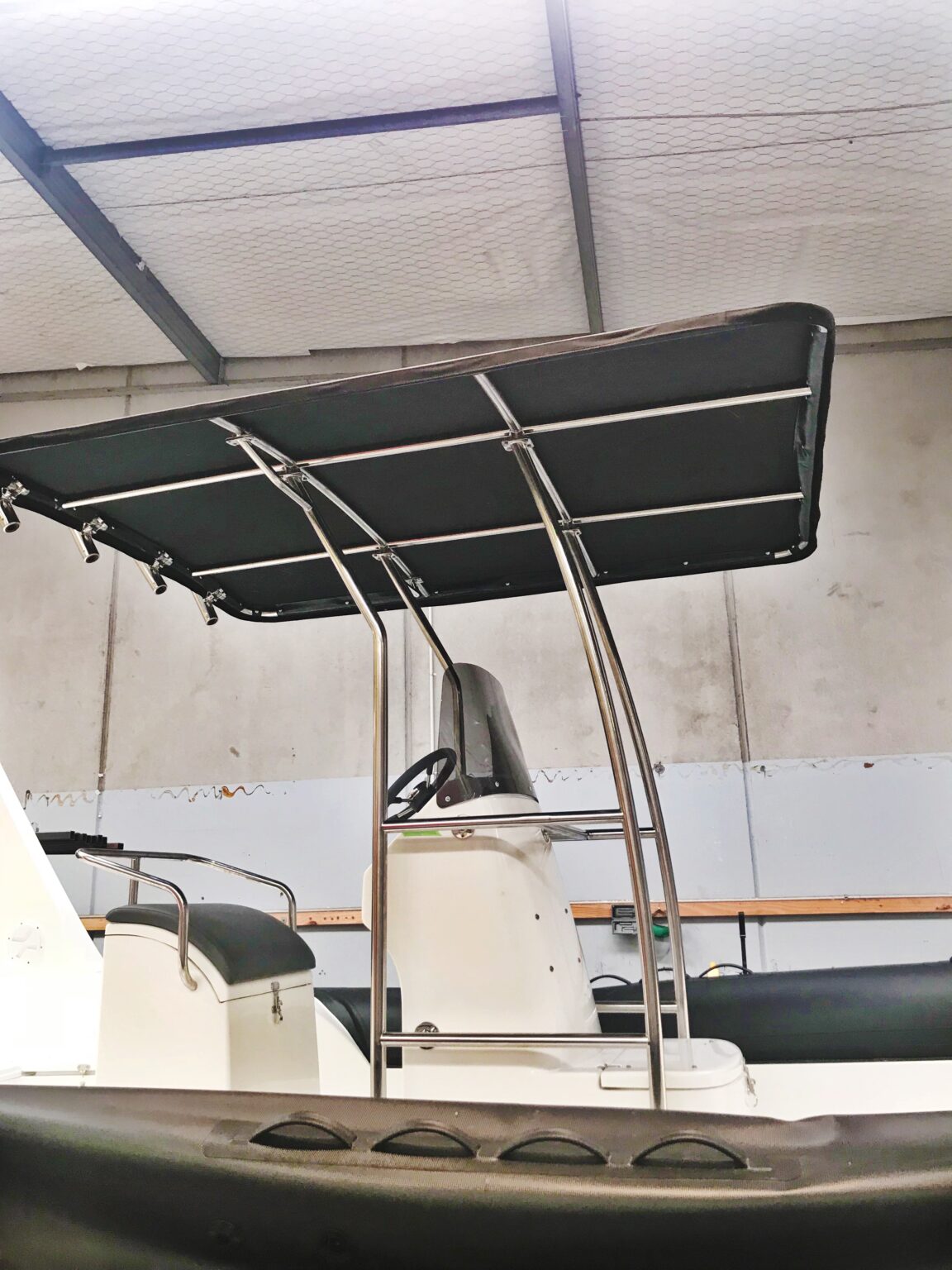
A bimini top is an open canvas structure that sits over the cockpit of the boat, supported by metal frames. The name bimini top originates from the island of Bimini in the Bahamas Islands, where they were originally created, according to Triangle Marine Centre.
Materials Used for Bimini Tops
Bimini tops are typically constructed using metal frames that provide strength and durability while supporting the canvas cover. The most common materials used are Aluminium and Stainless Steel, each offering unique benefits depending on the size of the boat and the intended use.
- Aluminium: Aluminium frames are lightweight, making them ideal for smaller vessels where weight is a concern. They are resistant to corrosion and easy to handle, which makes installation simpler. Aluminium is also cost-effective, providing a good balance between durability and affordability for casual boat owners.
- Stainless Steel: Stainless steel frames are heavier but exceptionally strong, making them well-suited for larger boats or vessels that are frequently exposed to harsh marine conditions. Stainless steel is highly resistant to rust and corrosion, ensuring the Bimini top remains sturdy and reliable over many years. Its robustness also makes it a preferred choice for high-traffic or commercial boating applications.
Benefits of a Bimini Top
Bimini tops are an excellent addition to boats of all types, offering practical solutions that enhance comfort, safety, and enjoyment while on the water. They are particularly useful for those who spend long hours boating, whether for leisure, fishing, or travel.
- Shade and Sun Protection: Bimini tops provide essential shade, allowing passengers to enjoy hot summer days without the risk of sunburn. This protection from direct sunlight helps reduce heat exposure and prevents fatigue or dehydration during extended periods on the water.
- Rain Cover: A Bimini top also acts as a practical shield against light rain, keeping the cockpit dry and allowing boating activities to continue even in less-than-perfect weather conditions. This ensures your boating experience is comfortable and uninterrupted.
- Enhanced Comfort: By providing shade and shelter, Bimini tops create a more pleasant environment inside the boat. They help regulate temperature, protect against harsh sun and wind, and allow passengers to relax in a comfortable setting.
Customisation Options: Modern Bimini tops often come with additional features such as full covers, side panels, and integrated fittings. These customisation options offer extended protection from the elements and can be tailored to suit your specific vessel and boating needs.
SRS are known for our ability to provide, tough, hard wearing, customised fabrication for the marine environment. Using our CAD expertise, we can develop you a 3D design, marine fabricate, and install your bimini design all in one stop. We also work alongside cover companies to ensure the process is made easy for you.
Below features a great video we found of how to go about sourcing a boat bimini top.
Enhance Your Boating Experience with a Custom Bimini Top
Bimini tops are an essential accessory for boat owners, offering sun and rain protection while improving comfort on the water. SRS Group provides full-service design, fabrication, and installation for custom Bimini tops, ensuring durability and a perfect fit. Whether for small or large vessels, SRS can help you enjoy every boating trip with style and practicality.
Frequently Asked Questions
Can a Bimini top be installed on any type of boat?
Yes, Bimini tops can be custom-designed and fabricated to fit small, medium, or large boats.
What is the difference between aluminium and stainless steel Bimini frames?
Aluminium is lightweight and suitable for smaller boats, while stainless steel is heavier but highly durable for larger vessels.
How long does it take to custom-fabricate a Bimini top?
Fabrication time varies based on design and size, but SRS can provide end-to-end service from design to installation efficiently.
Post first published 3 April 2019 and last updated 13 August 2025